• Menu
  • Skip to primary navigation
  • Skip to secondary navigation
  • Skip to main content
  • Skip to primary sidebar

Inspiring Portfolio Careers

From Energise - The Talent Liberation Company

  • Home
  • You
    • Why choose a portfolio career?
    • Who is a portfolio career for?
    • What is a portfolio career?
    • When is it time for a portfolio career?
  • Us
    • Why choose us?
    • What is our approach?
    • What are our values?
    • Who are our clients?
  • Services
    • On-line programmes
    • Career Coaching
    • E-Course
    • Skills CV Design
    • Marketing Mentoring
    • Personal Branding
    • Booking
  • Inspiration
  • Testimonials
  • Blog
  • Contact Us
  • Website Terms & Conditions
  • Cookie Policy
  • Privacy Policy
  • Home
  • You
    • Why choose a portfolio career?
    • Who is a portfolio career for?
    • What is a portfolio career?
    • When is it time for a portfolio career?
  • Us
    • Why choose us?
    • What is our approach?
    • What are our values?
    • Who are our clients?
  • Services
    • On-line programmes
    • Career Coaching
    • E-Course
    • Skills CV Design
    • Marketing Mentoring
    • Personal Branding
    • Booking
  • Inspiration
  • Testimonials
  • Blog
  • Contact Us

Blog

7 tips to think about your career KPIs in 2021

December 31, 2020 By //  by Rachel Brushfield

Career KPIs – what are they and do they matter?

“A key performance indicator (KPI) is a metric used by business to evaluate factors that are crucial to the success of the business.”

How do you measure career performance specifically? If you are employed, your employer may use very different measures to what is important to you and if this is the case, it may be a good time for a job or career rethink.

If you are self-employed, is it the rate per day, how many paid days you work a year, enjoyable work, prestigious projects, number of referrals, client testimonials, repeat business, value per transaction/project or number of new clients?

Here is our definition of career KPIs for individuals:

“Career key performance indicators” (KPIs) are metrics used by an individual to evaluate and measure factors that are crucial to their own perceived career success and progress.”

Types of career KPI

Here are types of KPI with examples of each.

  • Financial; salary, rate/day, rewards, bonus etc.
  • Progress; speed of promotion, increases in responsibility.
  • Work life balance; flexible working hours, sabbaticals taken, no of days holiday/year.
  • Fulfillment; feeling satisfied and enjoying your working hours and career, and having a sense of well-being with low stress.
  • Reputation/career capital; being seen as an expert, testimonials, being sought after, e.g. headhunted and needing to do less marketing over time.
  • Fit; a role that plays to your strengths and in which you feel ‘in flow’.
  • Purpose; giving back, making a difference to the world, involvement in corporate social responsibility (CSR), working for an employer with clients in the charity sector or social enterprise.
  • Academic; membership level e.g. fellow in professional organisation, grade for further qualification attained.

What are your top 3 career KPIs?

KPIs may change with life stage e.g. needing to fund children through school or university can make salary or a pay rise very important even if you are not that motivated by money, whilst flexible working is essential if you have young children and work for example.

7 tips to think about your career KPIs.

  1. Define your own unique career KPIs – don’t feel obliged to use standard measures – what is important to YOU?
  2. Track your progress; measure and monitor at least every 3 months.
  3. Know your industry averages so that you can bench mark/negotiate armed with facts and examples.
  4. Build self-awareness; know what motivates you and your personal values; what is important to you.
  5. Get a career coach to protect time to focus on your career and help you to see your full potential, something people often can’t do as they are too close themselves.
  6. Give yourself an annual performance review, or ideally diarise a career review and planning meeting four times a year.
  7. Grade your KPIs; primary and secondary or ‘must do’ and ‘nice to have’.

Get in touch for a no obligation 20 minute meeting:

https://www.inspiringportfoliocareers.com/contact-us/

Filed Under: Career fulfilment, Career prospects, Success at work Tagged With: career performance, career success, energise -the talent liberation company, rachel brushfield, the talent liberator

Career tips – from the ‘horse’s mouth’

December 28, 2020 By //  by Rachel Brushfield

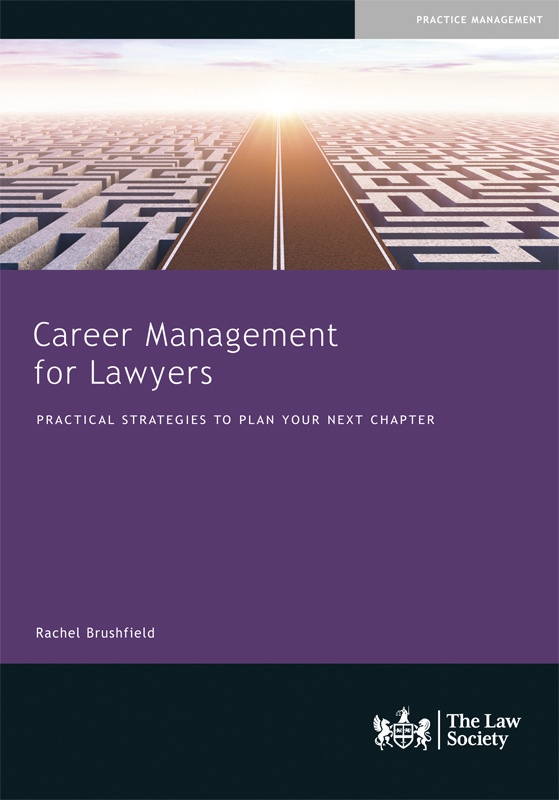
I love writing and it enables me to help more people. Chapter 3 of the Career management book I wrote for the Law Society is comprised of career transition case studies. This blog shares their tips for a successful career transition.

These tips are written for solicitors, but they apply to all sectors/professions.

Rachel Pearce

My 5 tips to solicitors considering whether to become a partner or not are:

  1. Get to know the other partners as well as the team to make sure that you will be happy working with them
  2. Be clear on what is expected of you in the new position and if you are not sure, ask!
  3. Make sure that the extra responsibility is adequately remunerated
  4. Ensure that you effectively time manage your caseload and management duties.
  5. Always strive for a good work/life balance

Nicola Wallbank

My tips for lawyers at a career crossroads are:

1. Take time to take stock

2. Using an experienced career coach can be beneficial,

3. Speaking with contacts in your network and finding a mentor can provide a useful sounding board, and

4. Don’t fear change.

Serena Spink

My three tips for a successful change in career direction, especially if you are thinking about moving from private practice to work in-house are:

1. Have confidence in yourself – don’t rule out positions that you would otherwise be interested in because you think that you lack experience

2. Understand your strengths and weaknesses – career coaching can help with this, and

3. Find a mentor who you respect or read up as much as you can on articles/blogs from others who have made successful and relevant career moves to the one that you aspire to.

Rachael Williams

My three tips to other returners for a successful transition back into work are:

1. If you are thinking of getting back into the profession – take that step – what do you have to lose?

2. Listen to the recommended courses of action from others and do them even if you are not sure that they suit you – they probably will.

3. Decisively carve out time for yourself – create that space to push back the endless domestic jobs or other commitments which may have stopped you from doing what you wish to do. In that newly carved space, write, read, research & experiment.

Michal Freeman-Shor

My  three tips for a successful career transition back to the law for other returners are:

1. Treat the nay-sayers (including your own self-doubt) as ‘white noise’ and make sure that you surround yourself with positive people who will support you

2. Don’t believe those recruiters who fob you off due to a lack of ‘recent or relevant experience’. They are only interested in making a ‘quick buck’. Find a recruiter who actually cares and is willing to represent the benefits that you bring as a candidate to their clients, even though you don’t tick all the boxes, and

3. Never, ever, give up on your dreams and aspirations. If you can dream it – it can happen. I am now a Back to law Ambassador for The Law Society empowering and mentoring returner solicitors and it is great to share insights and ideas from my own career journey to help others.

Stephanie Boyce

So, if you are thinking of creating a second/portfolio career, then here are a few tips you should consider:

  1. Evaluate your finances – can you afford to be out of work for any length of time, will you earn enough from your portfolio activities/second career?
  2. Evaluate your skill set – know your strengths and your weaknesses.
  3. Plan – do your research and make a plan. Set your objectives.
  4. Network – build your network in order to make yourself visible and make use of opportunities that your network may present.
  5. Finally – last but not least, enjoy!

Jenny Brewer

My 3 tips to lawyers considering a portfolio career are:

1. Expect to have to learn from others no matter how senior you are

2. Go with the flow, and

3. Enjoy the differences, don’t fight them.

Adrian Horne

My top 3 tips to help other young lawyers to choose the right career and law firm for them are:

1. Talk to people. Don’t be afraid to reach out to someone you don’t know for advice – in the process you will learn something new and potentially gain a valuable contact. Lawyers love to talk about themselves, so you will rarely be an inconvenience.

2. Do your research. Know the firms you are targeting, and why you are targeting them in particular. Know the area of the country you are targeting, and be prepared to explain why you are interested in that area. Decide early what work/life balance you are aiming for, and what remuneration you are comfortable with.

3. Boost your CV at every opportunity. Volunteer with the Citizen’s Advice Bureau and Victim Support etc.

Puja Gohil

My three tips to young people thinking about becoming a solicitor and evaluating which qualification route to take are:

1. Make a good first impression and strive to always maintain it

2. Accept that you will make mistakes – this is a natural part of learning to be a lawyer, but learn from them and do not repeat them and

3. Get as much experience from an early stage in your career, apply to the courts, magistrates, law firms and counsel chambers to understand each party’s roles in the legal process.

Kim Whitaker

My 3 tips for lawyers at a career crossroads and considering a career change are:

1. Try to do something you are interested in and enjoy: you have to do it every day

2. If you aren’t happy, try to find a way to make things better. You only have one life; and

3. Ask for help if you need it. People will usually support you if they can.

Tom Chakraborti

My three tips for a successful change in career:

1. Think about what you really prioritise

2. Do something because you really want it, and

3. Find a mentor with experience in the field, with whom you can bounce off ideas.

Chris Seele

My three tips for a successful change in career direction are

1. Have the courage and confidence that you can do something else

2. Go for something that truly excites and motivates you, and

3. Have a strong support network.

Olivia Streater

My three tips for a successful change in career direction, especially for women returners, are

1) Value your experiential/life learning as well as your university/academic learning

2) Remember you are competent, and

3) Have disciplined routines.

Lydia Brookes

My five top tips for lawyers ready for a career change would be:

1) Career change is made up of lots of small steps, even if you may not realise their significance at the time; think of it more as a gradual shift than a Big Bang!

2) Make a map of your network and talk to as many people as you can: verbalise what you want (including to your employer) and don’t feel you have to pretend you want a traditional career path if you think it’s not really for you.

3) Volunteer! Hands-on volunteering can be invaluable, as well as being on a board or a committee. It will make you realise what you are capable of and push you out of your comfort zone.

4) Don’t be put off by other people’s reactions. Lots of people can find it difficult to understand why you might want to do something other than be a full-time lawyer.

5) Be a regular saver so that you have some funds put aside to give you the flexibility to take some risks in the future, e.g. a period spent volunteering or with reduced working-hours.

What would your tips be?

More

Get in touch for your no-obligation 20 minute meeting to explore your needs.https://www.inspiringportfoliocareers.com/contact-us/

Book for the Law Society: “Career Management for Lawyers. Practical Strategies to Plan your Next Chapter”.

Career management for lawyers: https://bookshop.lawsociety.org.uk/p/career-management-for-lawyers-practi-paperback/

Filed Under: Career change

Why I love career coaching – Rachel Brushfield

December 28, 2020 By //  by Rachel Brushfield

I love career coaching for many reasons.

I have been coaching for over 20 years now, and I still love it as much now as I did at the beginning.

Why do I LOVE my job?

YOU! My clients.

Some become friends.

Many come back at another career crossroads, sometimes 10 years after the first time we worked together.

Why I love career coaching

Inspiring clients – my clients really inspire me and I learn a lot from them. I find it fascinating how people are different and see the world differently and yet how the themes are similar across all of them, e.g. lack of fulfilment, not liking marketing themselves, low self-belief etc.

Help people to help themselves – my job is to help my clients to clarify what they want and help them to get it. I am simply a catalyst and a pair of wing mirrors!

Self-awareness – I enjoy helping my clients to understand themselves better. This so important, especially in challenging times. I have done a lot of personal development work on myself. Awareness of the importance of this is growing, even amongst left brain cynical markets e.g. lawyers and engineers.

Reframing – we all get too close to ourselves to see solutions. Reframing something to help a client to become unstuck, is useful – new or different perspectives.  

Positivity – I am naturally optimistic and this is very useful in the uncertain times in which we live, for people who see the world as half-empty rather than half-full, and with growing competition in many markets, whether you are employed or self-employed.

Sharing ideas – one of my best skills is coming up with ideas for careers or businesses for my clients which play to their strengths. I have an insights and ideas brain!

Internal and external – career coaching is a combination of looking internally, within yourself, and externally, at the market and opportunities. I love helping my clients do both. My career heritage is in marketing and strategy, so I have useful tools and frameworks to help my clients to do this.

Overcoming blocks – understanding and overcoming a block to move forward is really satisfying. Pain then relief from the pain, gives you a brilliant ‘lift’, overcoming something that felt so difficult, so that you can move forwards.

Making a difference – a career takes up so much of our lives and has huge impact on relationships, money and happiness. It is a privilege to help people improve this.

Creative – coaching is a creative process. Sometimes I create an exercise for a client or get them to use a prop e.g. a knotty piece of string to help them to create a shift, or to create a drawing. 

Connect people – I have always been a natural connector. Introducing my clients to each other for ideas and support, helps them build their network, and enables potential collaborations and opportunities.

Uniqueness – everyone is absolutely unique and yet most don’t see this or define it. A personal brand is a great way to do this.

Building confidence – many people lack confidence. Not all admit this. Helping to build someone’s inner confidence and conviction like the words through a ‘stick of rock’ is one of the most important projects in life.

Growing your resilience – I am very resilient as is my husband who inspires me so much. There are practical tools to do this, even in the most challenging of circumstances.

Marketing you – many people dislike marketing themselves. This is becoming more important. You CAN find ways to do this comfortably, I promise.

Helping my clients to allow themselves to be who they really are and do what they want to do is why I love career coaching.

What do my clients think? https://liberateyourtalent.wordpress.com/energise-client-testimonials/

Get in touch: https://www.inspiringportfoliocareers.com/contact-us/

Filed Under: Career coaching Tagged With: being yourself, career coaching, career crossroads, energise - the talent liberation company, why I love career coaching

Self-reflective questions for 2021

December 21, 2020 By //  by Rachel Brushfield

Here are some self-reflective questions to think back on 2020 and think forwards to 2021.

Block out some time for this exercise and a quiet space for some ‘you time.’

What’s worked well in 2020?

What’s worked less well in 2020?

What do I want to do more of in 2021?

What do I want to do less of in 2021?

What needs to stop altogether in 2021?

What new things, if any, do I want to introduce in 2021?

What activities can I outsource or delegate that I am currently doing myself?

What’s my ‘headline’ that sums up 2020?

What do I want my headline to be for 2021?

What does success mean to me now?

What does career fulfilment mean to me now?

What 3 S.M.A.R.T. goals do I want to set myself for 2021, a) professionally and b) personally?

What is my career vision now?

How, if at all, have my career ambitions and aspirations changed?

What tech updates/purchases need to happen in 2021 to ensure that my technology is up to date?

What are my continual professional and continual personal development goals for 2021?

What’s the question that I most need to ask myself?

What am I ‘not getting around to doing’ which is important, but hasn’t been urgent?

Best wishes for 2021.

Filed Under: Reflection Tagged With: energise - the talent liberation company, self-reflective questions

How to find my happy place

December 21, 2020 By //  by Rachel Brushfield

Many years ago, I gave up smoking.

I was smoking 40 cigarettes a day.

It was expensive.

It was disgusting.

My mouth felt like the bottom of a budgie’s cage.

I had tried nicotine patches.

I had filled an empty jar with cigarette stubs and water, keeping it on my desk to put me off.

None of it worked.

And then one evening.

Something happened.

I was sitting on the sofa smoking and drinking a glass of wine.

At that time, I wanted to be more creative.

I noticed that I was inhaling a cigarette in the gap between my thoughts.

The gap in between your thoughts is where insights emerge.

Insights that can lead to creativity.

I was stopping myself from achieving what I want.

I was stopping myself from being creative.

Immediately. I stubbed out my cigarette.

It was the last cigarette I smoked.

I am not a fan of New Year Resolutions. Giving up something you enjoy in January in the middle of Winter is not the best time. Especially after 2020 and Covid-19!

So how did I find my happy place, so that the nicotine left my body?

I had kept a diary the previous month to understand the catalysts to reaching for a cigarette.

There were many.

  • Having a break.
  • Boredom.
  • An accompaniment to a cup of coffee.

I needed to make sure that I still took the short breaks, but without smoking. This was the positive thing that smoking had given me, as well as feeling part of a group, with a sense of belonging, having a cigarette outside a pub or at a party.

What worked for me to find my happy place was a combination of 4 things.

Every time I thought about having a cigarette, I would do one of these.

  1. Play an uplifting music track – about the same length of time it took to smoke a cigarette. Michael Jackson ‘Heal the world’ and Oasis ‘Wonderwall’ and Massive Attack ‘Unfinished Symphony’ worked a treat.
  2. Take a short walk in nature
  3. Name a positive emotion, access a memory when I had that positive emotion, relive the positive memory, connecting with all my senses in the memory. The beach in Ko Pi Pi, Thailand worked a treat!
  4. Sitting in a chair and doing the pause exercise – see below.

The ‘pause’ exercise – a 5 minute tool to de-stress and be present

  • Sit in a chair with your back straight, your hands resting on your thighs, and your legs straight out in front of you (not crossed) with the weight on your heels
  • Close your eyes
  • Notice the feeling of your body in the chair, your feet on the ground
  • Put your attention on the clothes on your skin and the feeling of the air on your hands and face
  • Notice the taste in your mouth and any smells
  • If thoughts come into your head, let them go and drift away like clouds
  • Now, focus your attention on external sounds around you
  • Put all your attention on these sounds. Notice sounds close to you and further away
  • Allow yourself to simply be present
  • Keep on putting all of your attention on being in the present moment and connecting with your senses, especially sounds and touch   
  • You will notice that your breathing starts to slow and your mental chatter quietens
  • Keep on putting your attention on your body sitting in the chair and feet on the ground
  • Place 200% of your attention on the sounds around you
  • When you are ready to complete the exercise and feel energised, bring your awareness back to being in the room and imagine roots growing from the soles of your feet into the earth so that you feel grounded
  • When you’re ready, open your eyes 

What tips would you share to find your happy place?

Filed Under: Happiness Tagged With: happiness, how to find my happiness, the talent lberator

Is career coaching worth it?

December 21, 2020 By //  by Rachel Brushfield

Is career coaching useful?

Is career coaching worth the cost?

Is career coaching really worth it?

This blog tackles these questions head on.

Below are some of the conversations that you may be having with yourself, or with your partner/friends about whether to do career coaching or not.

I’m too busy and lack time

  • 30 mins. coaching/week saves 8+ hours /week because you become more focused, productive etc.
  • Alot is achieved with just 30 minutes coaching/week or fortnight
  • Coaching often takes place on the phone/Zoom so it is very convenient and can fit into even the most hectic of schedules/lives.
  • We are happy to do early bird weekend appointments (I am an early bird!) and also weekend appointments.

I can’t afford coaching

  • Clients say that the results from coaching, whether saving time, making more money, feeling more fulfilled etc. are more than worth the investment
  • We provide additional added value, sharing marketing & personal brand insights as well as coaching with our clients
  • With outplacement (redundancy coaching/counselling), your new job is more likely to be achieved faster and with a higher salary than without coaching, so you end up banking more of your redundancy money and ultimately saving money
  • Often people unfulfilled in their jobs make ‘comfort’ purchases to make themselves feel better. This is a temporary ‘fix’. Career coaching to identify the right career for you provides sustainable reward
  • Many people have saved money in 2020 because of Covid-19, as they haven’t had the cost of train or tube tickets/petrol or lunch and coffees. This could be your budget pot for your career coaching

Getting coaching is ‘a sign of weakness‘

  • Coaching, as with sports coaching is about enabling already talented people to achieve even more and bring out their best
  • Many famous people, the perception of whom is far from weak, have a coach e.g. Madonna, President Clinton etc.

Wise people ask for help rather than struggle

How do I know that career coaching will really be worth the time, money and energy?

  • You can speak with Rachel’s clients to hear it from the horse’s mouth & read our client case studies and testimonials
  • Coaches have a coach – they would hardly pay for/do it if it didn’t work!
  • Coaching has agreed timeframes and goals and makes clients self-sufficient & more resourceful  – it’s not an ‘open-ended arrangement’

My job is to help people so that they don’t need me any more

When my clients come back at their next major career crossroads, sometimes over 10 years later, this makes me so happy

Isn’t coaching like therapy?

  • No, coaching isn’t like therapy because it is practical, has goals and focuses on moving forward positively. It’s all about achieving more in the present and creating the future you want
  • With therapy, the past is an issue, with coaching it’s a fact. Therapy is about addressing issues from the past because without doing this, the client can’t move forward positively.

A coach tells you what to do, I don’t like being told what to do

  • This is the complete opposite of what happens – a key principle of coaching is that the client has all the answers within them and if they come up with their own solutions, it is more empowering
  • Coaching gives the client time and space to think, reflect and plan and the coach acts as a sounding board, facilitating & focusing the client’s reflection and turning these into focused actions to move forward towards defined goals. The coach shares any thoughts & ideas only with the client’s permission
  • Friends and family might tell you what they think you should do, but a coach certainly doesn’t, they are completely objective and yet supportive to your desired outcome. The people closest to you can be a barrier to you, because they have their own agenda and may fear change. E.g. they may like the status or money associated with your current role or career

Partner objects e.g. career change or partner confiding in someone other than them

  • They can have a chat with me so that they feel comfortable
  • It may be relevant to have a joint coaching session with you and your partner to work through the blocks
  • The increased happiness and fulfilment of you being in the right role for you has a positive knock-on effect on your loved ones, whether a partner and/or children
  • Fear of change is part of being human and this can be explored in the coaching

More

“5 times career coaching is well worth the splurge”. Muse article: https://www.themuse.com/advice/5-times-a-career-coach-is-well-worth-the-splurge

How to choose a career coach: https://www.inspiringportfoliocareers.com/how-to-choose-a-career-coach/

How does career coaching work? https://www.inspiringportfoliocareers.com/how-does-career-coaching-work/

Interesting in having a no obligation chat to explore how career coaching could help you? Get in touch:https://www.inspiringportfoliocareers.com/contact-us/

Filed Under: Career coaching Tagged With: the talent liberator

Stop Christmas. Start career clarity!

December 17, 2020 By //  by Rachel Brushfield

It is hard to ‘wrap’ our Energise career e course’ so it looks Christmasy!

Many people cannot have the Christmas they want due to Covid-19.

Rather than feeling annoyed about something that you cannot influence, because of government rules about Covid-19 and the tier system – an easy way to create frustration, reframe the situation. Take control and turn it into a gift of unexpected time to think and focus and get clear about your career and what next.

I created the Energise career e course on some of our career retreats, slaving over a hot laptop! It contains all the exercises used in career coaching.

It is structured into carefully planned modules with practical exercises, it helps you to get clear about who you are, what you want and how make to happen.

The e-course is ideal if you are working full time, making time for coaching difficult, or you want to plan a future career change, e.g. you are a working parent wanting more flexibility.

If you are thinking of creating a ‘side-hustle’, a common beginning of a portfolio career, it is a great way to get clarity, and more cost effective than individual career coaching.

Section 1: Introduction

Overview of the e-course and insights into the changing world of work.

Section 2: Where am I and why am I there?

Insights from reviewing your career to date to inform your future career.

Section 3: Am I ready for a change?

Understanding your motivation, values and job likes and dislikes: the crucial components of making good career decision and choices

Section 4: What is stopping me making a change?

Fears and blocks about career change that can inhibit success and how to overcome them.

Section 5: What resources do I have?

Insights about your skills and career achievements to help you market yourself confidently and successfully.

Section 6: Where could I be?

Ideas and inspiration to help you identify career options matching your skills and experience. It will help you weigh up all the options open to you, including those you have not previously considered.

Section 7: How could I get there?

Defining your personal brand to appeal to employers and how to leverage your network to create new job and career opportunities.

Section 8: How will I know that I have been successful?

Defining your new career goals, vision and plan, giving you a clear sense of purpose and focus.

Section 9: How do I keep on track?

A recap and summary of all your insights and goals from sections 1-8.

Section 10: Further resources & inspiration

Examples of clients who have changed their career, our own career journey and useful resources.

Our e-course is available to buy in individual modules or as one course – all 10 modules.

It includes:

  • 1 hour of coaching with Rachel Brushfield (worth £160+VAT)
  • Over 250 pages
  • 20+ practical exercises
  • Tools and tips you can use again and again
  • Clarity and insight guaranteed

It is set up on PayPal, so you can pay using a credit card, smoothing your cashflow, with Christmas expenditure.

Buy it now, and give yourself a great Christmas present, or gift it to someone you care about. https://www.inspiringportfoliocareers.com/shop/e-courses/e-courses/

Filed Under: Career change, Career strategy and planning, Clarity Tagged With: career e course, on-line courses

From Parish Priest to Business Consultancy and Entrepreneur

December 16, 2020 By //  by Rachel Brushfield

This case study, Keith, was a client of Peter Wilford. He helped his client, a parish priest to create a portfolio career.

What was the situation?

Keith had become unfulfilled in his career in the church and wanted to move into the commercial world, but still keep his work as a priest.

But he had no idea where or what.

Keith’s confidence was low.

He didn’t know how to market himself as he had never had to do it before.

Keith had a good network of church contacts, but few links outside of the church.

However he had strong entrepreneurial flair and a persuasive nature.

How I helped

  • I helped him to get clear about what he had to offer outside the church.
  • I supported him to broaden his networks beyond the church.
  • I helped him to define his S.M.A.R.T. career goal and plan and how to make it happen.
  • I helped him to see what he had to offer, what made him unique and how to market himself confidently and comfortably.
  • I helped him to understand the world of business, having been in it myself for many years

What was the result?

After working with Keith for two months with 121 career coaching, he had set up a portfolio career including a freelance consultancy business specialising in the voluntary sector and the church.

He won clients including national charities and community projects in South London.

That was in the late 1990’s.

And now?

Keith is now a Consultant in an international firm helping organisations, teams and individuals to identify and achieve their goals. He is still an ordained priest.

Footnote from Rachel Brushfield, ‘The Talent Liberator’

What a wonderful contrasting eclectic and ecclesiastical portfolio career!

Keith’s career transition reminds me of Charles Handy, a man who inspired me to set up my own business Energise over 24 years ago.

Read more about Charles Handy: This article “The paradox of Charles Handy – Vicar and visionary, modern management’s most eminent philosopher says it takes a village to build a company.”

https://www.strategy-business.com/article/03309?gko=4d780

Book: “The Age of unreason” by Charles Handy https://www.amazon.co.uk/Age-Unreason-New-Thinking-World/dp/0099548313

Book: “The empty raincoat” by Charles Handy. https://www.amazon.co.uk/Empty-Raincoat-Making-Sense-Future/dp/0099301253

More

Interested in exploring a portfolio career for yourself?

Get in touch to arrange your free 20 minute consultation to discuss what would be useful for you.

https://www.inspiringportfoliocareers.com/contact-us/

How does career coaching work? https://www.inspiringportfoliocareers.com/how-does-career-coaching-work/

Start a portfolio career – tips https://www.inspiringportfoliocareers.com/start-a-portfolio-career-tips/

Pros and cons of a portfolio career https://www.inspiringportfoliocareers.com/pros-and-cons-of-a-portfolio-career/

Filed Under: Career change Tagged With: career planning

How to create a career breakthrough

December 9, 2020 By //  by Rachel Brushfield

This exercise below is perfect for end of year reflection and thinking about 2023. 10 self-reflective questions. Block out some time in your diary between now and the beginning of the year. It is one of the action planning exercises in Chapter 4 ‘How to change career direction’ in my book “Career Management for Lawyers. Practical Strategies To Plan your Next Chapter” for the Law Society:

https://bookshop.lawsociety.org.uk/p/career-management-for-lawyers-practi-paperback/

  1. What specific career breakthrough am I seeking and by when?
  2. What is the significance of this career breakthrough for me personally?
  3. What actions have I taken in the past 5 years to influence this career breakthrough to happen?
  4. What are my learnings for the future about how I plan for my future career breakthroughs?
  5. What qualities do I have to help me to achieve a career breakthrough?
  6. What actions can I take in the future to positively influence my desired career breakthrough?
  7. Who do I know in my network who can help me to achieve my career breakthrough?
  8. Who do I know who has successfully achieved a career breakthrough in the last 6 months whose advice I can seek?
  9. In what way and with whom will I celebrate my career breakthrough?
  10. How could a mentor, coach and/or sponsor help me to accelerate my career breakthrough?

How can we help you achieve an uplifting career breakthrough?

Get in touch to discuss what career change you are seeking. If you don’t know yet, don’t worry. This is partly how we help our clients – creating clarity from insights, internal (you) and external (the market.)

https://www.inspiringportfoliocareers.com/contact-us/

Filed Under: Career change, Career prospects Tagged With: career breakthrough, career transition, energise

How important is career fulfilment at work?

December 9, 2020 By //  by Rachel Brushfield

2020 has been a strange year.

Covid-19 has made it so.

Lockdown has given many people more time to think than usual as well as a different way of working.

No commuting.

No face to face meetings.

Working from home.

More time to think about their career and whether it is giving them what they really want.

Whether they have career fulfilment and a decent work life balance usually.

Many people have been thinking about whether they want to go back to the old ‘normal’.

Do you?

Lots of articles in the media about ‘hybrid’ working – a combination of working from home and going to the office.

So how important is career fulfilment at work?

Below are some self-reflective questions for you to ponder.

Not all people have enjoyed a good work life balance during 2020.

Working mums home schooling have had a tough time juggling everything.

Poor career fulfilment is a common catalyst for people to seek a career change.

Ask yourself these questions to reflect upon your own career fulfillment.

7 questions – purposeful reflection about your career fulfilment.

  1. How fulfilled am I at work at the current time?
  2. How can I increase my own career fulfillment?
  3. What most motivates me at work?
  4. What most demotivates me at work?
  5. What have been my most fulfilling career highlights to date and how can I replicate them?
  6. What or who is most causing my dissatisfaction at work?
  7. What, in my view, is the number 1 factor causing disengagement in my employer?

Are you at a career crossroads?

Why not:

a) Put an Energise career coaching gift voucher on your Christmas ‘wish list’?

b) Get in touch to arrange your confidential no obligation 20 minute meeting: https://www.inspiringportfoliocareers.com/contact-us/

Filed Under: Career fulfilment, Career satisfaction Tagged With: career planning, job satisfaction

  • « Go to Previous Page
  • Go to page 1
  • Interim pages omitted …
  • Go to page 4
  • Go to page 5
  • Go to page 6
  • Go to page 7
  • Go to page 8
  • Interim pages omitted …
  • Go to page 37
  • Go to Next Page »

Primary Sidebar

Sign Up for Our Newsletter

Privacy by SafeUnsubscribe

Looking for something?

  • Being
  • Career agility
  • Career capital
  • Career change
  • Career coaching
  • Career fulfilment
  • Career prospects
  • Career satisfaction
  • Career strategy and planning
  • Change and uncertainty
  • Clarity
  • Confidence
  • Contracting and interim
  • Creativity
  • Diversity & inclusion
  • Emotonal intelligence
  • Employee engagement
  • Employment law
  • Entrepreneurial
  • Evolving a business
  • Fear
  • Flexible working
  • Freelance
  • Future-proof your career
  • Goals
  • Guest blog portfolio career
  • Habits
  • Happiness
  • Health
  • Hobby becoming a business
  • Interviews
  • Learning
  • Managing emotions
  • Marketing and selling
  • Money and abundance
  • Motivation
  • Networking
  • New year
  • NLP
  • Optimism
  • Performance
  • Personal brand
  • Personal development
  • Portfolio career
  • Productivity
  • Redundancy
  • Reflection
  • Relationships
  • Resilience
  • Retirement
  • Returners
  • Second careers
  • Self employment
  • skills
  • Small businesses
  • Social business
  • Social media
  • Starting a business
  • Stress
  • Success at work
  • Supporting our network
  • Talent management
  • Thought leadership
  • Transferable skills
  • Uncategorized
  • Unretirement
  • Vaues
  • Women
  • Work
  • Work life balance
  • Work trends
  • Working mothers

On Twitter

Twitter Sent An Error: Could not authenticate you.
  • Facebook
  • LinkedIn
  • Twitter
  • Website Terms & Conditions
  • Cookie Policy
  • Privacy Policy

+ 44 (0) 845 22 55 010
rachel@inspiringportfoliocareers.com

Copyright © 2026 Inspiring Portfolio Careers from Energise, The Talent Liberation Company · Site Design by DigitalJen ·

We use cookies to ensure that we give you the best experience on our website. If you continue to use this site we will assume that you are happy with it.