• Menu
  • Skip to primary navigation
  • Skip to secondary navigation
  • Skip to main content
  • Skip to primary sidebar

Inspiring Portfolio Careers

From Energise - The Talent Liberation Company

  • Home
  • You
    • Why choose a portfolio career?
    • Who is a portfolio career for?
    • What is a portfolio career?
    • When is it time for a portfolio career?
  • Us
    • Why choose us?
    • What is our approach?
    • What are our values?
    • Who are our clients?
  • Services
    • On-line programmes
    • Career Coaching
    • E-Course
    • Skills CV Design
    • Marketing Mentoring
    • Personal Branding
    • Booking
  • Inspiration
  • Testimonials
  • Blog
  • Contact Us
  • Website Terms & Conditions
  • Cookie Policy
  • Privacy Policy
  • Home
  • You
    • Why choose a portfolio career?
    • Who is a portfolio career for?
    • What is a portfolio career?
    • When is it time for a portfolio career?
  • Us
    • Why choose us?
    • What is our approach?
    • What are our values?
    • Who are our clients?
  • Services
    • On-line programmes
    • Career Coaching
    • E-Course
    • Skills CV Design
    • Marketing Mentoring
    • Personal Branding
    • Booking
  • Inspiration
  • Testimonials
  • Blog
  • Contact Us
You are here: Home / Archives for career transition

career transition

Transferable skills – where next? Part 1.

April 6, 2021 By //  by Rachel Brushfield

This is part 1 of a 4-part blog series about transferable skills.

A common theme amongst all of the career coaching clients I work with is a) they have a blind spot seeing their own skills and talents and b) how they can use them in other ways, i.e. possible new jobs or different careers to what they have done before.

I act as a pair of ‘wing mirrors’ to help them see their skills and be clear about where else they can use them.

In these times of redundancies and shrinking sectors caused by the impact of the coronavirus, this is a very important area to explore as part of your future-proof career.

What is a skill?

A skill is defined as: “cleverness at doing a thing, either from practice or a natural gift.”

Why do people find it hard to see their own skills?

Most people don’t think of themselves in terms of skills, and find it immodest to talk about their own ‘natural gifts’.

Common phrases that people express are: “I just do my job” or “it’s just what I do.”

It is not surprising therefore that people need support in seeing new career options for themselves.

People are discouraged from saying that they are clever and our specific and unique talents are rarely acknowledged or recognised by others. Other people may have thought about you are good at, but not shared this information with you, so it is worth asking to elicit this useful information.

In employer engagement research, frustration about lack of feedback is a common complaint from employees about their line managers, so giving feedback to your direct reports is a good thing to do to boost morale at this time if you are a manager.

Articulating the benefits you bring

Awareness of your specific skills and the ability to articulate them, sharing tangible examples of the benefits they bring is crucial in career success, especially when you are competing against a lot of good candidates.

Spell it out

For people seeking a new or different career, being explicit in helping others to see how your skills are useful in a related context is a must to convince your potential employer that you are up to the task, and not a risk. Self-awareness, confidence and the ability to market yourself, plus overcoming natural fears about change enable a change in career direction to be within reach.

Self-reflective questions

  • What’s my best skill and in what other contexts is it useful?
  • What work tasks make me feel energised?
  • What work activity can I not stop myself from doing?

Inspiring quote

“Believe in yourself. Have faith in your abilities. Without a humble but reasonable confidence in your own powers, you cannot be successful or happy.”

Norman Vincent Peale

5 tips to help you identify your transferable skills

1) Get someone to ask you how you do your job and to write down what you say and then share their perspective of your skills with you.

2) Think about something you do well naturally and write down the specifics using the third person. Practice saying “I am really good at, for example when ….” This makes it feel more comfortable and not ‘boastful.’

3) Analyse the ‘process’ you use to do your work step by step. Most people have a process incorporating certain skills but don’t see this, as they are too close to themselves. This can be turned into a model or infographic to use on your CV, on social media or on a personal web site.

4) Ask people you work with or live with for feedback about your specific skills and do the same for them.

5) If you want to fast track your awareness, get a career coach who is trained to see your skills and help you to see opportunities where they are useful that you may be unaware even existed.

Helping people to identify their skills, knowledge and experience and new context in which it can be applied is one of my best skills. This is a combination of analysis, lateral thinking, making connections, keeping up with trends in careers and skills, and working with people from many different sectors over the 20+ years that I have been doing career coaching.

If you are at a major career crossroads and thinking about changing career direction, becoming self-employed or developing a portfolio career, we can help.

Why not get in touch for your free no obligation meeting? https://www.inspiringportfoliocareers.com/contact-us/

Save the dates! Coming soon.

Energise seminars to help you to market yourself.

10-12 Tuesday 11 May 2021 on Zoom: “Why me? What value do you bring?” https://www.eventbrite.co.uk/e/marketing-seminar-why-me-what-value-do-you-bring-tickets-149507654419

10-12 Tuesday 15 June 2021 on Zoom. “Marketing me: Proactive marketing.”

Contact us to find out more: https://www.inspiringportfoliocareers.com/contact-us/

Filed Under: Transferable skills Tagged With: career transition, portfolio career, portfolio careers. career povot, the talent liberator, transferable skills

How to create a career breakthrough

December 9, 2020 By //  by Rachel Brushfield

This exercise below is perfect for end of year reflection and thinking about 2023. 10 self-reflective questions. Block out some time in your diary between now and the beginning of the year. It is one of the action planning exercises in Chapter 4 ‘How to change career direction’ in my book “Career Management for Lawyers. Practical Strategies To Plan your Next Chapter” for the Law Society:

https://bookshop.lawsociety.org.uk/p/career-management-for-lawyers-practi-paperback/

  1. What specific career breakthrough am I seeking and by when?
  2. What is the significance of this career breakthrough for me personally?
  3. What actions have I taken in the past 5 years to influence this career breakthrough to happen?
  4. What are my learnings for the future about how I plan for my future career breakthroughs?
  5. What qualities do I have to help me to achieve a career breakthrough?
  6. What actions can I take in the future to positively influence my desired career breakthrough?
  7. Who do I know in my network who can help me to achieve my career breakthrough?
  8. Who do I know who has successfully achieved a career breakthrough in the last 6 months whose advice I can seek?
  9. In what way and with whom will I celebrate my career breakthrough?
  10. How could a mentor, coach and/or sponsor help me to accelerate my career breakthrough?

How can we help you achieve an uplifting career breakthrough?

Get in touch to discuss what career change you are seeking. If you don’t know yet, don’t worry. This is partly how we help our clients – creating clarity from insights, internal (you) and external (the market.)

https://www.inspiringportfoliocareers.com/contact-us/

Filed Under: Career change, Career prospects Tagged With: career breakthrough, career transition, energise

How does career coaching work?

November 28, 2020 By //  by Rachel Brushfield

This blog post shares a detailed example of how career coaching works in practice.

This case study is one of Peter Wilford’s clients, Mark P.

Objective

  • To provide a tailored programme of 1:1 career and executive coaching for a senior employee in his 50’s who was leaving his employer after over 30 years’ service.
  • To explore alternative options including securing employment with another organisation, moving into consultancy or starting up a new business.
  • To build rapport with the client over a period of time and deliver a tailored programme of sessions.

Background

From my experience of working with many people facing similar situations, I was able to spend some initial time with Mark in a “Review and Explore (Taking Stock)” phase during which he completed several documents including a series of profiling tools (personality and psychometrics).

These allowed me to clarify in some detail specifically what he, uniquely, could bring to his next role or work.

From here we discussed the different work and job options open to him.

There were four alternatives and each one required a full analysis and discussion.

Four career options:

  1. Setting up his own business

2. Marketing himself as a specialist consultant

3. Developing a portfolio career

4. Targeting the not for profit / public sector or SME organisations in the private sector.

Each option and strategy needed careful thought and positioning. 

Mark was keen to keep all options open and I coached him in how to do so whilst not losing momentum.

I helped him understand what he would need to do to move forward in each of the agreed options.

How the programme evolved.

During our sessions, it became clear that Mark needed to draw up a formal marketing plan for each option, and a structure to help him keep on track. 

We agreed that we would need to test out the necessary marketing actions and approach required for each option to establish a priority order.

It was important that Mark was comfortable with and could own and drive forward this plan and the actions confidently in the months ahead.

My coaching also revolved around building Mark’s confidence and giving him the tools to use on his own both with, and without my support, once his coaching was complete and we stopped working together.

He needed to have a good CV, to develop a good ‘talk’ about his career and work, and to be able to position himself in the market professionally both on paper and face to face at interview. 

He had to believe in himself and his career strategy.

How did we achieve this?

  • By agreeing a plan of action at the end of each coaching session, by following up on agreed actions and by reviewing these and revising them both at the start of and during our next session.
  • By maintaining momentum so that Mark was able to see progress moving forward.
  • I needed to challenge Mark and he wanted to see me do so in order to build up his confidence in me as his coach.
  • By narrowing down the options as time progressed so that Mark was able to focus his attention on the options that were likely to reap the most benefit.
  • By helping Mark come to terms with his situation and to move forward confidently from employment to a new life and a fresh career, after being made redundant and 30 years working with one employer.

Building confidence and momentum

Mark favoured a structured approach and we needed to develop a good relationship so that he trusted me and knew that my advice and coaching would benefit him. 

We worked in a way that suited him, but I needed to take him out of his comfort zone on several occasions. 

He valued this and it helped to strengthen our working relationship. 

I ensured that Mark saw real progress through regular reviews and email / telephone conversations in between our sessions

Challenges that we faced

A challenging jobs market. Slowness in the job market.  I coached Mark to learn how to persevere and overcome the slowness of the market with confidence.

Networking. Mark was not a natural networker and had been cautious about the value of networking and using LinkedIn. 

Social media. Like many clients initially, social media was quite alien to him. We had a session on this so that he bought into its value as part of his marketing activity.

Developing progress on his career journey

Gaining quick momentum gave Mark greater confidence in his marketability and him as a person.

He started to see things in a different light to what he had experienced in corporate life.  

We measured success by delivery against actions and making progress towards the agreed plan.

We also measured it by the number of new conversations that he started to have, both through new network contacts and from more established routes.

I saw Mark’s confidence grow in how he viewed and progressed the option to set up his own business and develop a portfolio career as opposed to going into another PAYE role.

What were the results?

Mark has set up his own business and picked up some initial retained consultancy work and this has been very motivational for him. 

He now has a portfolio career in place.

It has also helped him to recognise that this was the best way forward for him and that he has an offering that people want to buy. 

Also that he is able to make the transition to self-employment and run his own business.

Mark has become confident in managing his career by himself with me as a mentor as well as a coach. 

He has driven his own career being self-employed with myself as more of a ‘back stop’.  A career coach is like a pair of armbands, essential but then not needed anymore, as the client has learned to swim.

Phase two has worked well and he is now developing a successful business.

He is also developing, with a partner, an interesting and potentially lucrative project for regional businesses. 

He is working through the business plan and financials.  

He is also in contact with a multinational retailer who is interested in the programme.

Client testimonial

“Following my redundancy last year, Peter worked with me to assess my situation and help me consider the options open to me. Throughout this process he was unflagging in his enthusiasm, support, and encouragement. His approach was excellent – he listened sensitively to me as well as challenged and motivated me to make progress. He helped at a practical level too by, for example, drafting of a new C.V. for me. Peter’s professionalism backed up by his extensive knowledge, sources of information and a range of practical tools enabled me to explore options that I would never have thought of and ultimately helped me to decide on my new career path. Peter has been both a mentor and ‘critical friend’ and I have greatly valued his support. He was also fun to work with at a time that was fairly testing for me, which was a real bonus. I hope we can keep in touch!”   Mark W.

What next?

Why choose a portfolio career? https://www.inspiringportfoliocareers.com/why-portfolio-career/

Who is a portfolio career for? https://www.inspiringportfoliocareers.com/who-has-portfolio-careers/

What is a portfolio career? https://www.inspiringportfoliocareers.com/what-is-a-portfolio-career/

When is it time for a portfolio career?https://www.inspiringportfoliocareers.com/when/

Curious about how career coaching could help you at your career crossroads?

Get in touch to arrange your free 20 minute meeting: https://www.inspiringportfoliocareers.com/contact-us/

Filed Under: Career change, Portfolio career Tagged With: career pivot, career transition, energise -the talent liberation company, portfolio career, redundancy

What change do you seek at work?

January 5, 2013 By //  by DigitalJenIPC

Market Opportunities  sign

I have been creating some new ‘inspiring client examples’ this week, having had the time over the break to reflect on last year.

Changing your career can feel daunting and hearing about the successful transitions of other people can help make it feel possible.

One of my favourite inspiring quotes is by Alan Kay: “The best way to predict the future is to invent it.”  Career change in times of uncertainty can feel scary, but doing nothing changes nothing. And too much analysis = paralysis!

Here are some clients we have worked with – they inspire us so much and we learn a lot from them.

Choose the one(s) that you most relate to:

Escaping from the law:

http://archive.constantcontact.com/fs193/1102862873131/archive/1112027555089.html

Transitioning from the public to private sector:

http://archive.constantcontact.com/fs193/1102862873131/archive/1112056859585.html

Wanting to get off the hamster wheel

http://archive.constantcontact.com/fs042/1102862873131/archive/1106787631164.html

Child friendly work

http://archive.constantcontact.com/fs042/1102862873131/archive/1106786138068.html

Work with meaning and purpose

http://archive.constantcontact.com/fs042/1102862873131/archive/1106786590378.html

What would be the headline for your desired career transition this year?  Why not get in touch and tell us about your dream/goal? Click on this link:

http://careerstrategies.co.uk/careercoaching/what-next/

For useful insights, tips and more inspiring examples of career change,  follow us on Twitter @talentliberator

Filed Under: Career change, Change and uncertainty Tagged With: back to work, career transition, change, energise, new career, new year resolution, rachel brushfield, talent liberator

Comfortable or uncomfortable career change?

December 8, 2012 By //  by DigitalJenIPC

Path through green grass

Career change is a big change affecting lots of things and often people get stuck for different reasons. Change and clarity about the change need to be created at a number of levels and ‘stuckness’ for a short or longer time can occur at any of these; vision; identity; values; beliefs; capabilities; behaviours; environment.

Vision: The future vision you have for your second career is often very different from your first career or the vision your parents/guardians had for you. Many people fell into their career, or received no/poor advice, so may not have had a vision at all. Creating a vision – the horizon towards which you are always moving towards is crucial, especially through challenging uncertain times and knockbacks.

Identity: Identity – ‘who am I’ in the world of work and society is crucial to how we feel. Having a place in the world and feeling connected is an inherent part of being human. Life is full of job titles and ‘what do you do?’ questions when you meet people in a social or business context.  “I am a senior manager” or “I am a doctor’ or “I am a lawyer” for example can be difficult to let go of unless you have thought through the new you and feeling comfortable and congruent with what you say when asked “What do you do?”

Values:  What is important to you is an inherent part of the desire for career change – your values. Poor career fulfilment is caused by people’s values not being honoured by their work. If you love innovation, but your boss or employer loves tradition, this is a mismatch and causes dissatisfaction. Making decisions consciously and intuitively about your career or job options around your values is essential. Values also affect what type of employment or self-employment is right for you.

Beliefs: ‘I must work 9-5’ or ‘I need to strive and get to the top of my profession’ or ‘it is impossible to earn a living doing what I love’ are often beliefs that cause people to be stuck. Often the beliefs we have about work are not even ours, but ones that we pick up from society, the media or parents e.g. ‘self-employment is risky’ or ‘a secure job with a career path is essential.’

Capabilities: Everyone is talented in their own unique way but many people find it hard to identify their capabilities and skills and see where else they are useful. If you cannot see where you are moving to, it will be unlikely that you will step off into what can feel like a void or abyss!

Behaviours: Proactivity and self-belief make a huge difference to making a career change, career success and career adaptability. Doing nothing is the easiest behaviour to choose but then nothing changes. Making a decision causes stress and anxiety, magnified in uncertain times and it is human nature to avoid stress and fear. Acknowledging these and keeping on moving forward makes uncomfortable change feel more comfortable.

Environment: The environment in which we thrive can be really important for career fulfilment; being out of the office, or having music on in the background rather than silence. Not being clear what environment energises and nourishes you can cause an impasse.

At any point in a career transition, you can get stuck at one or more of these levels. To create a successful career change, you need to think through all these areas; vision; identity; values; beliefs; capabilities; behaviours; environment.  This is something that it can be hard to do yourself, as you are too close to yourself.

Where are you stuck? What advice/experience can you share to help people to move forwards? A career coach helps you to become unstuck, like a plumber helps you unblock a drain so things flow free again.

For more insights and tips, follow us on Twitter: @talentliberator

PS Did you know we do career coaching gift vouchers? They make a great thoughtful and practical birthday, Christmas or leaving present.


Filed Under: Career change Tagged With: Career change, career transition, change, energise, new career, rachel brushfield, talent liberator

What’s your competitive advantage?

August 3, 2012 By //  by DigitalJenIPC

In times of high unemployment, frozen or restricted recruitment and a high degree of competition, you need to have a strong competitive advantage to be chosen.

Here are 14 tips to help you stand out from the masses and be chosen now and in the future:

1) Skill-up. Invest in your skills – take responsibility for developing yourself and keep your skills up to date. Skills have a shorter shelf life than in the past and you need more skills than before to be chosen.

2) Connect: Create, build and keep in touch with your network. Support them and they will support you.

3) Be visible. The world is increasingly going on-line. Social media is key for visibility – embrace it.

4) Unique brand. Be clear about what makes you unique; your life and work experiences, skills and qualities combined are a unique combination. Who are they useful for? Be targeted.

5) Be pragmatic.  It is great to have an ideal, but have a plan A, B and C in challenging times.

6) Set goals. Have a clear SMART goal for where you want to be and break it into small steps for a busy world.

7) Be proactive. Make your success happen by asking for introductions, sharing ideas, developing thought leadership.

8) Be strategic in approach. Look at market trends, skill shortages, new careers to stay one step ahead. Have a vision and a plan to get there.

9) Review. Everything is changing fast, the whole world are now your competitors, technology is replacing many jobs.  Keep up with the changes – don’t get left behind.

10) Be confident: in who you are and what you have to offer – this can make a huge difference to success.

11) Be creative. How can you overcome employer objections e.g. ‘not an exact fit’, ‘expensive vs. younger candidates’ and get experience of a new area without having a job?

12) Be smart. Get support. We would love to help,

13) Be targeted: Don’t scatter your efforts and dilute the potential results. Do your research and go for a ‘bull’s eye’.

14) Be responsible: Take responsibility for your career and development, don’t leave it to someone else.

Recommended reading: Lynda Gratton “The Shift” and Reid Hoffman (founder of LinkedIn) “The start up of you”.


Filed Under: Career change Tagged With: career, career choices, career journey, career transition, competitive advantage

Copywriter to rocket scientist?

July 18, 2012 By //  by DigitalJenIPC

A change in career can be a step or a leap. I was pondering how dramatic the career changes of my clients have been. They have been really varied – here are 3.

From design management to explore cheese holidays in France:

http://archive.constantcontact.com/fs042/1102862873131/archive/1106787631322.html

From advertising to charity:

http://archive.constantcontact.com/fs042/1102862873131/archive/1106786590378.html

From market research to face workouts:

http://archive.constantcontact.com/fs042/1102862873131/archive/1108092201346.html

What is the most radical change in career you have heard about? Do share it.

If you are pondering a change in career, our bulletins are full of insights and tips:

Previous bulletins:

http://www.liberateyourtalent.com/cms/index.php?option=com_content&view=article&id=79&Itemid=106

Opt in to receive future bulletins:

http://visitor.constantcontact.com/d.jsp?m=1102862873131&p=oi

We especially LOVE helping people change career who do not fit in a box, who need to reposition themselves and who know they want something different but don’t know what.

Follow us on Twitter: talentliberator

Filed Under: Career change Tagged With: career, Career change, career transition, careers advice, changing careers, midlife career change, new career, new career ideas

Do You Find Career Change Daunting?

December 14, 2010 By //  by DigitalJenIPC

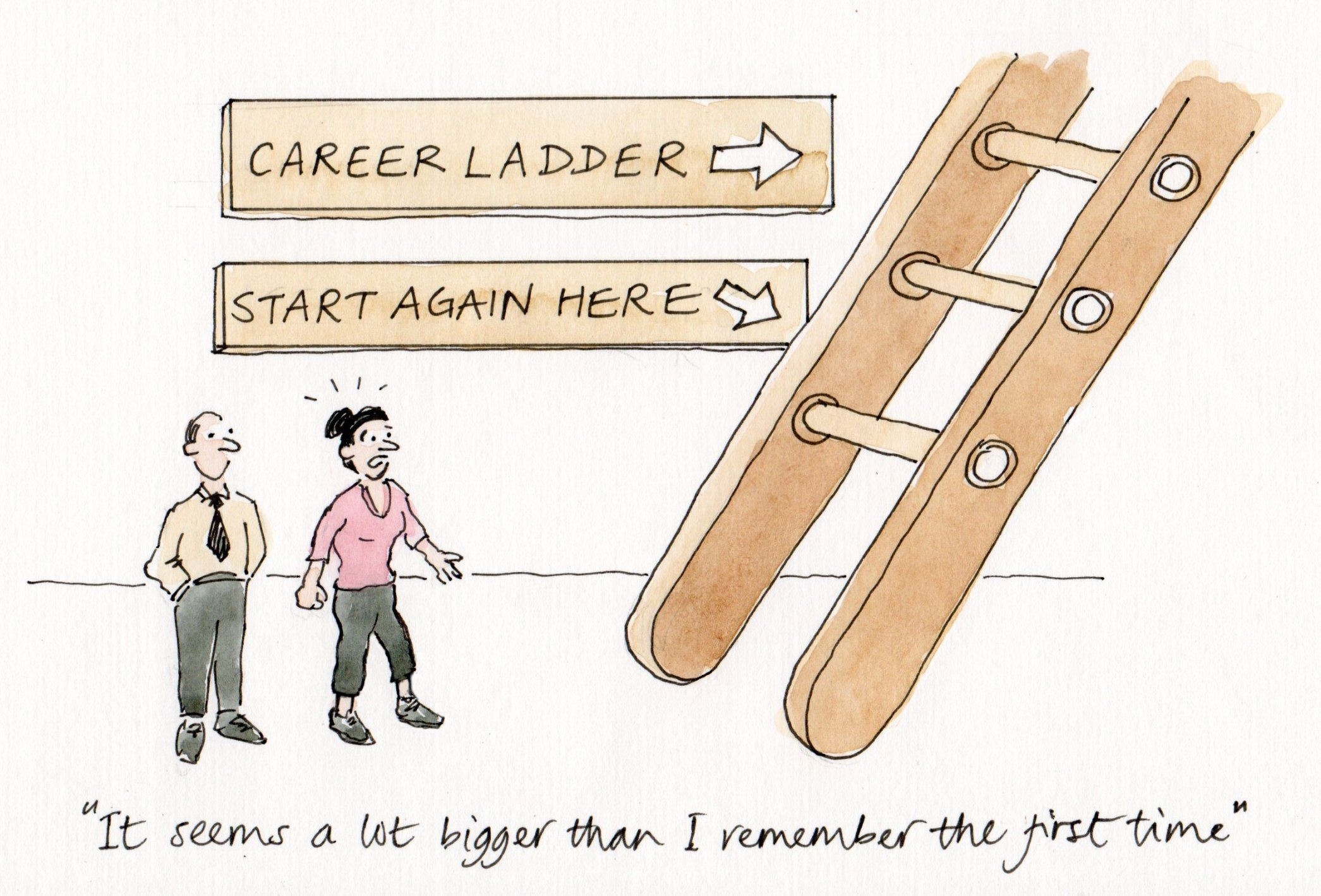
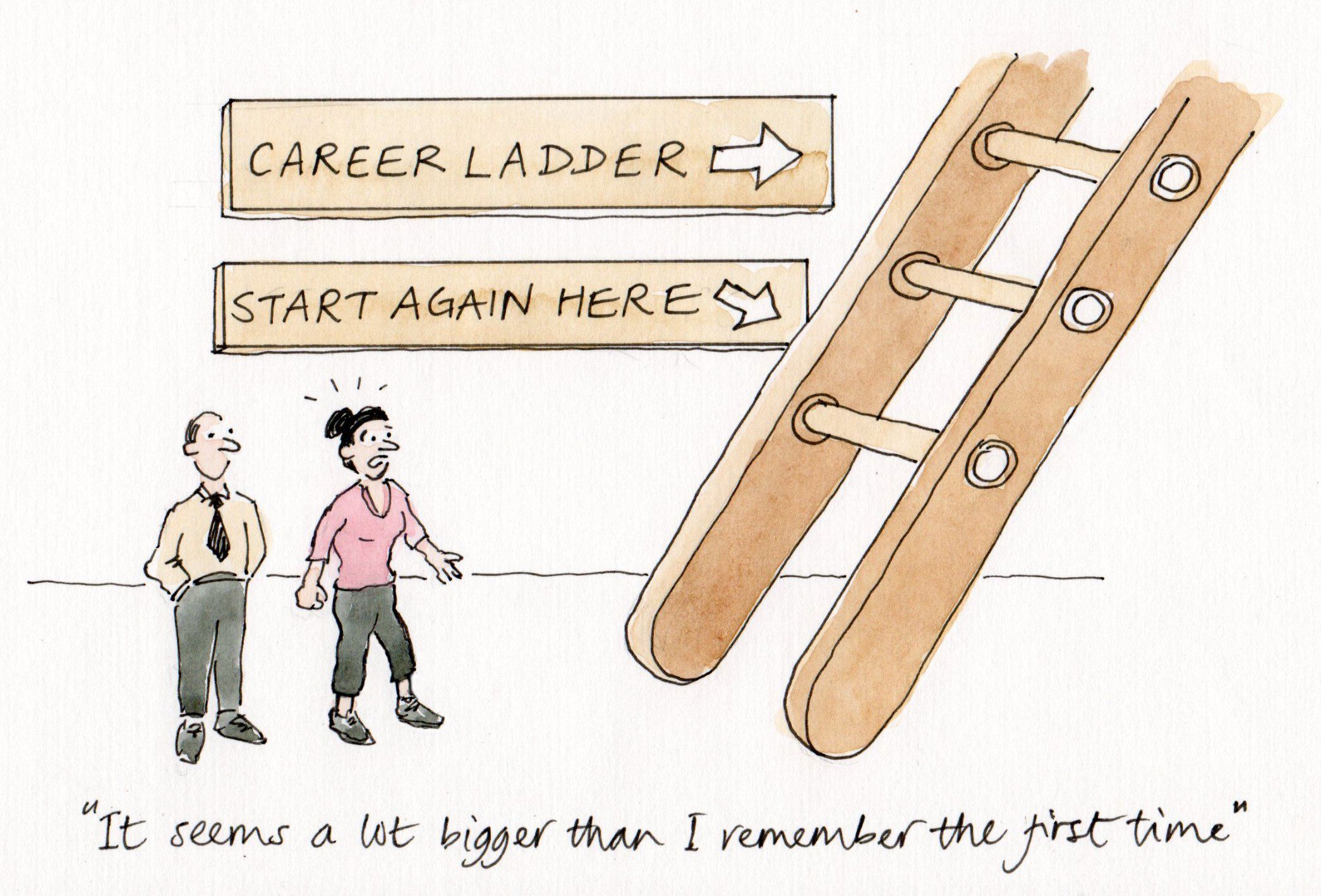
Career Change Feel Daunting?Career change can feel really daunting, can’t it. Like a ladder, taking it one step at a time is wise.

Download our free report “Pain free career change” and you can make career change safe. Take the first step now and click on this link to download your free report http://www.careerstrategies.co.uk/

Filed Under: Career change, Change and uncertainty, Fear, Stress Tagged With: Career change, career change e course, career coach, career journey, career transition, careers advice, change, new career

Primary Sidebar

Sign Up for Our Newsletter

Privacy by SafeUnsubscribe

Looking for something?

  • Being
  • Career agility
  • Career capital
  • Career change
  • Career coaching
  • Career fulfilment
  • Career prospects
  • Career satisfaction
  • Career strategy and planning
  • Change and uncertainty
  • Clarity
  • Confidence
  • Contracting and interim
  • Creativity
  • Diversity & inclusion
  • Emotonal intelligence
  • Employee engagement
  • Employment law
  • Entrepreneurial
  • Evolving a business
  • Fear
  • Flexible working
  • Freelance
  • Future-proof your career
  • Goals
  • Guest blog portfolio career
  • Habits
  • Happiness
  • Health
  • Hobby becoming a business
  • Interviews
  • Learning
  • Managing emotions
  • Marketing and selling
  • Money and abundance
  • Motivation
  • Networking
  • New year
  • NLP
  • Optimism
  • Performance
  • Personal brand
  • Personal development
  • Portfolio career
  • Productivity
  • Redundancy
  • Reflection
  • Relationships
  • Resilience
  • Retirement
  • Returners
  • Second careers
  • Self employment
  • skills
  • Small businesses
  • Social business
  • Social media
  • Starting a business
  • Stress
  • Success at work
  • Supporting our network
  • Talent management
  • Thought leadership
  • Transferable skills
  • Uncategorized
  • Unretirement
  • Vaues
  • Women
  • Work
  • Work life balance
  • Work trends
  • Working mothers

On Twitter

Twitter Sent An Error: Could not authenticate you.
  • Facebook
  • LinkedIn
  • Twitter
  • Website Terms & Conditions
  • Cookie Policy
  • Privacy Policy

+ 44 (0) 845 22 55 010
rachel@inspiringportfoliocareers.com

Copyright © 2026 Inspiring Portfolio Careers from Energise, The Talent Liberation Company · Site Design by DigitalJen ·

We use cookies to ensure that we give you the best experience on our website. If you continue to use this site we will assume that you are happy with it.