“Rachel, you put me on this road 6 years ago. This is what my CV said: ‘Seeking a senior in-house multi-faceted role with an international visionary organisation with a diverse employee mix and need for employee relations expertise to safely navigate growth and continual performance improvement and engagement through uncertain times.’ Rachel, a million thanks. Those career coaching sessions with you back in 2016 and here I am now in 2022, about to embark on a role that aligns totally with the vision you helped me craft. It gives me goose bumps! I am so excited to be given an opportunity to immerse myself into something new.”
Uncategorized
The Psychological Contract: Mind the gap

As career coaches, the majority of our clients come to us when they are fed up of feeling fed up. When they feel that the psychological contract has been damaged.
There is a tipping point of no return.
For some clients, this can take up to ten years.
We exist in a V.U.C.A. world – volatile, uncertain, complex and ambiguous. In uncertain times, it is human to play safe, not take a risk by moving jobs, removing employment rights. Covid-19 has magnified this. But as we adjust to the ‘new-normal’ of living with Covid-19, this inertia is likely to shift. Rapidly.
Covid-19 was a massive ‘curved ball’.
It compressed a decade’s change into just 1 year. Change that had been a long time coming. From a culture of presentism in the office, to working from home using Zoom and Teams. Most organisations ‘stepped up to the plate’ and quickly introduced new policies and implemented digital solutions.
Covid-19 impact
Positives
- Commuting time saved.
- Environmental benefits of less commuting.
- Time for deep thinking about what people really want from work and what is really important for them in life.
- Spotlight on who does childcare and household management.
- Normalising discussion about mental health challenges e.g. loneliness and isolation.
Challenges
- Juggling home-schooling and work for working parents.
- Communicating with staff working from home.
- Mental health.
- Trust and creating psychological safety with working remotely.
- Keeping employees productive and performing.
- Younger workers missing office life.
- Longer working hours.
- Computer fatigue – physical problems e.g. sore backs and eye strain.
- Lost revenue from postponed events and conferences.
- Longer working hours/day. A poll of 8000 employers and individuals by Hays in May 2021 found that 52 per cent reported working longer hours when working remotely than before Covid. Of these, 25 per cent reported working more than 10 extra hours a week, while 41 per cent said they put in between five and 10 extra hours a week. 40 per cent worked during their annual leave over the last 12 months, rising to 52 per cent for workers at mid-management level.
- Easier for recruitment agents to interview candidates on-line.
- Candidates have found it easier to speak with recruitment agents, working from home.
- More job options for employees to work with employers further away from home.
Recruitment trends
The market is starting to awaken after period of hibernation.
Recruitment activity continued to rise sharply across the UK at the start of the third quarter, according to the latest KPMG and Recruitment and Employment Federation (REC), UK Report on Jobs survey. Permanent staff appointments and temp billings both rose at near-record rates, while growth of demand for staff hit a fresh high as Covid-19 restrictions eased further and economic activity continued to pick up.
However, the availability of candidates continued to decline rapidly in July, driven by concerns over job security due to the pandemic, a lack of European workers due to Brexit, and a generally low unemployment rate. As a result, pay pressures intensified, with starting salaries rising at the fastest rate in the survey history, and temp pay inflation also accelerating.
Robust demand for staff and the further rollback of pandemic restrictions led to a sharp increase in the number of people placed into permanent job roles in July 2021, with growth easing only slightly from June 2021’s all-time record. Temp billings meanwhile expanded at the quickest rate since June 1998.
Ending of the furlough scheme
The government’s furlough scheme comes to an end on 30 September 2021. What will happen? It is hard to predict, it is unknown territory.
The furlough scheme has been a lifeline for many organisations and individuals over the last 18 months.
Being paid to do nothing. What impact will this have on employee motivation and engagement ongoing?
Could this result on high quality candidates being made redundant and available for an immediate start to facilitate growth again?
As experienced career strategy coaches, our clients come to us for help and support when they are in ‘pain’ and ready for change:
- Redundancy
- Feeling unfulfilled at work
- Approaching retirement and don’t want to retire
- Wanting better work life balance
- Ready for a change in career direction e.g. a portfolio career or to become self-employed
- Feeling stuck
The psychological contract
For some managers, ‘out of sight has been out of mind’ and working from home has been an opportunity to avoid managing, something they were reluctant to do in the first place.
Other managers, have gone the extra mile to look after their employees’ well-being, will resulting increases in loyalty, productivity and performance.
With businesses starting to return to their offices and moving to hybrid working becoming the norm for many, this is a critical time for membership organisations.
What will be the impact on ‘The Psychological contract’ – this is the unspoken contract between an employer and employee about what the employee gives, time, energy and enthusiasm compared with what they receive – it feeling ‘fair’. It is difficult to quantify, but employers who are perceived not to have looked after their employees during Covid-19 are likely to see higher than average employee turnover.
The jungle drums of negative word of mouth are easier and faster via social media and Slack than around the water cooler.
How their employer treated them during Lockdown will have a massive unspoken impact on this.
- Was there regular communication from managers and directors?
- Did they get the tech set-up that they needed to work from home?
- Was their employer empathetic about home schooling and work flexibility?
- What support was offered about well-being e.g. an ergonomic office chair?
7 things that don’t happen for the psychological contract to be damaged
- No career conversations about the future
- Promises broken e.g. a pay rise or promotion not materialising
- Increased workload over a period of time and receiving nothing in return
- A role that doesn’t play to someone’s strengths
- Favouritism/bias at work
- Someone’s values (what is important) not being honoured at work
- Poor internal communication so they feel left in the dark

Summary
This is a critical time for talent retention with recruitment rising, a shortage of candidates and the salaries of new roles increasing, the psychological contract will be stretched for many. September has traditionally been an active time for careers and job changes. What happens this year with furloughing ending at the end of September is anyone’s guess. The UK has never been in this situation.
More
Energise Marketing yourself seminar “Marketing me. Successful proactive marketing.” 6-8pm Wednesday 20 October 2021 on Zoom. Book now. Early bird ticket sales end Saturday 16 October 2021. https://www.eventbrite.co.uk/e/marketing-me-successful-proactive-marketing-tickets-189693778197
White paper
To receive your free copy of our Energise white paper about career agility, ‘The New Polymaths’, please e mail us: https://www.inspiringportfoliocareers.com/contact-us/

NEW – ‘The New Polymaths’ – Energise white paper

It has been an exciting few months researching and writing our new White Paper.
Our fabulous Energise intern Tilly Mummery has been slaving over a hot laptop conducting Internet research and interviewing over 30 people about career agility.
We’re really grateful that the interviewees gave their time to be interviewed/provide a quote.
The interviewees included:
- Professor Stephen Mason
- Christina Blacklaws, Former President of the Law Society.
- Elizabeth Rimmer, CEO, LawNet
- I.Stephanie Boyce, current President of the Law Society
- Jordan Furlong
- Mitch Kowalski
- Coral Hill, Founder of Legal Women magazine
And Morgan Wolfe and Olivia Streater who were panellists at the Energise event in December 2020.
E mail us to receive your own copy of the white paper: https://www.inspiringportfoliocareers.com/contact-us/

Career profiling tools

Career profiling tools are useful to provide insights to make wise career choices.
Peter Wilford is trained in these career profiling tools.
This blog shares a summary of these career profiling tools – what each does, what it is useful for and a link to book your career profiling tool on this web site using PayPal.
Career assessment tools bookable with Energise on this web site
- MBTI
- Personality Performance Indicator (PPI) (DISC Based)
- PPI Job Profiler
- Career Drivers Assessment
- Firo-B questionnaire
- Strong Interest Inventory
- Strengths Assessment
MBTI
What is does
The MBTI measures the individual on four factors of personality, which identify them as one of 16 personality types.
What it is useful for
The MBTI is typically used for understanding and building Self-Awareness, Career Planning, Team role-awareness and Team Building.
Book your MBTI session now https://www.inspiringportfoliocareers.com/shop/career-assessment/myers-briggs-type-indicator-mbti/
Personality Performance Indicator (PPI) (DISC Based)
What it does
The PPI profiles the individual’s current personality temperament.
What it is useful for
It can be used for self-awareness and for assessing career options. It can also form part of the selection process to assess the individual’s likely progression by indicating their potential strengths and development areas. 10 page report. It is used typically for Personal Awareness, Career Planning, Job Skill Matching and Personal Development.
Book your Personality Performance Indicator (PPI) (DISC Based) assessment now
https://www.inspiringportfoliocareers.com/shop/career-assessment/disc-ppi-job-profiler/
PPI Job Profiler
What it does
The PPI Job Profiler evaluates the behavioural requirements of positions in order that the individual can be matched and progression made.
A 10 page report is provided for each assessment of the ideal job profile. Requires up to 3 separate profiles to be completed of the “ideal” job profile against which the PPI is then administered for each applicant or job holder.
What it is useful for
It is typically used for Personal Awareness, Job Matching, Personal Development and Team Development.
Book your PPI Job Profiler session now
Career Drivers Assessment
What it does
This measures your core Career Drivers. Completion of a 30 mins (approx.) questionnaire which produces a graph which charts your 9 career drivers (motivations) by degree of strength.
What it is useful for
This is typically used for Personal Career Awareness and Job Search planning.
Book your Career Drivers Assessment now https://www.inspiringportfoliocareers.com/shop/career-assessment/career-drivers-assessment/
Firo-B questionnaire
What it does
Firo-B measures how a person typically behaves towards others and how that person would like others to behave towards him or her.
What it is useful for
It assesses interpersonal style – and its appropriateness in relationships – on three levels. This is used for: Interpersonal Characteristics.
Book your Firo-B questionnaire session now https://www.inspiringportfoliocareers.com/shop/career-assessment/firo-b/
Strong Interest Inventory
What it does
The Strong Interest Inventory identifies your occupational interests. It provides robust insights into a person’s career interests, helping them to discover potential career paths they may not have considered, and giving them a wealth of information about how they approach the world of work.
What it is useful for
Is a tool to help clients navigate their potential minefield of choosing a career. It can also be used to help professional people adapt to lifelong career changes.
It is widely used both at the start of a career, in a first job or at various stages throughout a career, inspiring ideas for those professional changes that typify a portfolio career. It is used for job interest matching.
It looks at six broad interest areas determining to what extent a person is artistic, social, enterprising, conventional or realistic.
It measures preferences within 30 professional fields, from the arts to law
It ranks the top ten most compatible occupations from a possible 260 specific jobs
It describes an individual’s personal style within five workplace themes, such as teamworking, leadership and risk-taking
It is based on large, representative norms that account for race, age and gende
Book your Strong Interest Inventory now https://www.inspiringportfoliocareers.com/shop/career-assessment/strong-interest-inventory/
Strengths Assessment
What it does
The Strengths Assessment measures your key strengths and gives you pointers for future work and jobs as well as tips on how to develop them at home and at work. It is used for Career Assessment, Profiling and Job Search.
What it is useful for
Understanding your skills and strengths is key to your career development. Being able to categorise your abilities can help you to more clearly define your working role and your career direction, to celebrate what you are good at, accept the things you are not and appreciate others for their strengths in your areas of weakness.
The purpose of this simple assessment is to allow you to easily assess your own strengths from a broad selection of skills using three dimensions: enjoyment, proficiency and importance (to your current or potential role) and to group them into five categories: prime strengths, untapped strengths, necessary skills, underdeveloped skills and weaknesses.
Book your Strengths assessment now
http://Book your Strengths Assessment now
About Peter Wilford who is trained to do your career profiling test: https://www.inspiringportfoliocareers.com/talent-liberation/
How career resilient are you?

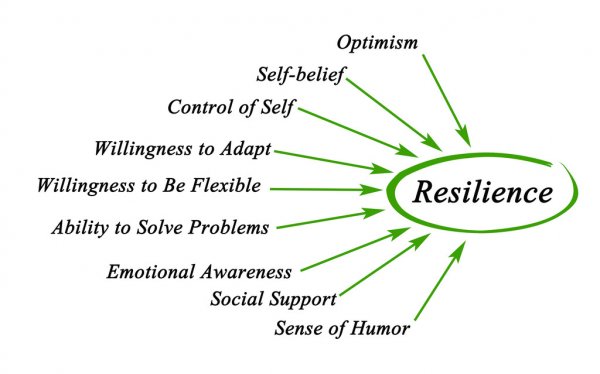
In uncertain times, resilience is very important.
We are in VUCA times.
Volatile
Uncertain
Complex
Ambiguous
The dictionary definition of ‘resilience’ is “The capacity to recover quickly from difficulties; toughness.”
What are the ‘career resilience’ success factors?
- Resilience is a learnable skill = the ability to ‘bounce back’.
- Behaviours, thoughts, actions, attitudes + skills.
- Mindset: setbacks are part of life + learning.
- Reduce vulnerability to stress. Disassociate from challenging situations – like you are looking at it from a distance, rather than being in it.
- Support network, trusted relationships. People you can be honest and open about how you are feeling.

- Meaningful work – inner ‘compass’. Follow your values.

- See the ‘big picture.’ Keep things in perspective.
- Think like an entrepreneur. Be persistent.

- Commit to life-long learning.
What would you add?
Resilience is an in-demand skill by employers.
What have been the most testing times in your career?
My 3 most testing times when I built my career resilience
I think the 3 most testing times in my career have been:
Being made redundant in a recession in 1991
I was incredibly lucky – I was able to get a job in the same geographical area, so didn’t have to sell my home with negative equity at a time of sky high interest rates. My redundancy turned out to be a positive thing, as I hadn’t been happy at my employer, (the macho culture didn’t suit me), and I moved to the consultancy side of work, which is much more me.
Having moved to Oxfordshire, doing a self-funded 6-month CPD break just before the credit crunch of 2007.
It was a very difficult time, but I managed to find an ‘inner resilience turbo boost button! I gritted my teeth and ploughed on with my career plan, taking the long-term view, building my network, broadening my career options and developing my career capital for long term success
I am so glad that I did.
Spending 10 months writing 2 books to build my career capital and the book publisher going bust.
So frustrating, but I am glad that I wrote them.
10 tips to build your career resilience
- Push out your comfort zone – do something that feels challenging
- Read books, watch videos and listen to podcasts about entrepreneurs
- Create your own personal board
- Get a career coach
- If things feel especially challenging, put a chair in the corner of the room, picture yourself in the chair, and give yourself some advice as though you were a consultant
- Spend time in nature
- Do activities that make you feel energised
- Recall times in the past when you ‘bounced back’ – what enabled you to do this?
- Set some career resilience CPD goals
- Define your personal values – what is really important to you
What tips would you add?
Self-reflective questions
How career resilient am I?
What enables career resilience?
What actions can I take to become more resilient and develop these success factors?
What next?
Contact us for a free Career resilience self audit tool: https://www.inspiringportfoliocareers.com/contact-us/

Redundant? Free webinar for you
Do you know anyone who is being made redundant?
Please share our free webinar with them: “Redundancy? What next?”
12-1pm on Wednesday 9 September 2020 on Zoom. Book on EventBrite:https://www.eventbrite.co.uk/e/redundancy-what-next-tickets-117841219259
Sarah Broad’s guest blog about her portfolio career part 2

- This is part 2 of a 2-part blog for Energise.
Mini biog
My career has allowed me to develop a distinct set of skills and experience in HR and Recruitment within the legal and professional services sector. I set up Attune Flexible Jobs 2 years ago, to help clients advertise their business support roles and showcase their flexible / agile working with stories, case studies, and thought leadership. We also provide consultancy and bespoke flexible working solutions. For candidates, we provide a one stop shop for professional roles on a flexible working basis, connecting candidates to employers, so the hard work is done and there is no need to worry about when to have the flexible working conversation. Also, advice, training and coaching programmes. As a qualified coach and MCIPD professional I have coached many individuals, managers and teams to ensure flexible working is beneficial for everyone. I also write and provide guidance, advice and updates on flexible and agile working and have been interviewed for many different publications. I have been on radio and podcasts in the UK too.
Read part 1 of Sarah Broad’s guest blog about her portfolio career:
https://www.inspiringportfoliocareers.com/sarah-broads-guest-blog-about-her-portfolio-career-part/
What are the challenges of having a portfolio career?
Keeping on top of everything can be a challenge and giving everything equal attention. Switching off and compartmentalising isn’t always easy but has got easier with practice.
Who or what helps you to manage your portfolio career?
I have a good support network, for example friends to help if my children are ill. I also have the benefit of the infrastructure with my client e.g. an IT person, their network, a web person and recently a Digital Mum to help me.
How do you approach marketing your portfolio career?
Networking and I get new work from word of mouth recommendation.
What if any, is the personal brand used for your portfolio career?
I don’t have a personal brand.
What advice would you give to someone considering a portfolio career?
Keep up your networks, keep in touch with people, not just when you need something. Be clear about what you want and ask. My first freelance job was after I was chatting to someone at a friends party. I said I was looking for a new role working from home 3 days a week – happy to do evenings. 3 weeks later I got a phone call with exactly that. It was only suppose to last 2 months but lasted over a year and then led on to a headhunting project.
What benefits do portfolio careers bring specifically to women and mothers, rather than to men?
Portfolio careers provide flexibility but it also hones into your specific skillset. Portfolio careers are not rigid so you must be the type of person that can work with fluidity and adapt accordingly, particularly at the beginning. Working mothers are more likely to need flexibility but the benefits are not exclusive to women. If you can’t find a flexible job, a portfolio career is work you can design and deliver on your own terms. Just keep an open mind about how this might work.
What tips can you share for people considering a portfolio career?
- Work out your finances – what you need to live on.
- Keep up with your network.
- Be open-minded and flexible.
- Work out what you want and don’t want.
- Be clear about your philosophy for life – know yourself and make sure your work fits with your life.
- Be ready for a steep learning curve and be prepared to learn new skills and push out your comfort zone.
- Have a good support network.
- Feel the fear and do it anyway – just have a go!
More
View Sarah Broad’s LinkedIn profile:
https://www.linkedin.com/in/sarah-broad/
Look at the Attune Jobs web site:
Follow Attune Jobs on Twitter:
Interested in a portfolio career for yourself? Get in touch to arrange your 20 minute free telephone consultation:
What trends & factors are creating growth in portfolio careers? #1 Employment/work

The world of work is experiencing rapid change.
- There is a shortage of full-time jobs for the number of people who want to work full-time: different work options need to be considered.
- The ‘job for life’ concept is dead: work is in a state of flux.
- Times are uncertain: mixing employment and self-employment reduces the risk of 100% going it alone.
- More companies and firms are seeing contracts and freelance as a wise choice to resource for specific business/client needs: ‘pay as you go’ appeals to companies rather than increasing permanent headcount, with the risk, legal and financial implications this entails.
- The number of good well-paid jobs is reducing: self-employment is driven by the need for professionals to sustain the living standards to which they have become accustomed.
- Self-employment in professional occupations has risen by 37%: the highest rise of all types of occupation.
- One-third of the self-employed community are part-time self-employed and account for half of the rise in self-employment since 2000: the number of people who work for themselves but do less than 30 hours a week has grown by nearly 65% from 2000, compared with 20% growth in the number of full-time self-employed.
- There is a growth in portfolio careers: the number of people who work for themselves in addition to being a conventional employee has grown by 31% since 2000.
- More than 40% of women have become self-employed since 2000: twice the growth rate of self-employed men.
- Women are creating self-employment growth: accounting for 60% of the increase in self-employment since the economic downturn in 2008.
- Self-employment and portfolio careers give people a vehicle for independence, enable them to be in charge of their own destiny and have more meaning: Italian economist Paolo Verme states: “freedom is by far the most significant predictor of life satisfaction”.
- A portfolio career is satisfying: you can set your own rules, have autonomy and flexibility and design it around family needs and personal choices. It also enables people to feel more in control and have greater influence. 82% agree that it is more meaningful than a typical job.
More reasons why portfolio careers are growing in the next few blogs.
Who is a portfolio career for?

A portfolio career appeals to a number of different groups of people:
- People with multiple interests who are independent, creative and/or entrepreneurial in nature tend to be drawn to portfolio careers, as they can find the hierarchical nature of law firms and corporates stifling.
- Young workers wanting to travel and study also find portfolio careers appealing.
- Working mothers seek the flexibility of a portfolio career to successfully combine their career and family.
- Executives over 55 who want a new challenge but face ageism when seeking a new full-time role may choose a portfolio of part-time jobs.
- Executives not ready for retirement who want to keep purposeful, can create a portfolio, gradually reducing their working hours while taking on non-exec director/volunteer roles, and increasing their leisure time as they wind down to 100% retirement.
How would you describe the reasons for your interest in having a portfolio career? Contact us to arrange your free 20 minute telephone chat: https://www.inspiringportfoliocareers.com/portfolio/connect/
The ‘push me’, ‘pull you’ of a portfolio career

Question for you.
How do you know when to edit or evolve your portfolio career?
I was reflecting on this recently during a career retreat and came to the conclusion that there are ‘push’ and ‘pull’ factors.
‘Push’ factors are negative things that cause you to re-evaluate. ‘Pull’ factors are things that attract you so ‘pull’ you to want to change the mix of your portfolio career.
Top 11 ‘Push’ factors
• Low satisfaction or fulfilment
• Doesn’t help you to progress or grow
• Poor money for the effort/time
• More competition for work
• Doesn’t fit your career vision
• Bored of doing the same work
• Technology replacing demand
• Trend to in-house from freelance
• Stressful or feels like hassle
• Doesn’t fit with your personal values
• Unreasonable deadlines or demands
Top 11 ‘Pull’ factors
• Builds your career capital
• Learn a new skill
• Stimulating new challenge
• Broaden your network
• Good money
• Emerging new work area
• Work you can do flexibly
• Work you can do from home
• Project with people you like
• New ‘string to your bow’
• Aligns with your longer-term vision
What would be your top 3 ‘push’ and ‘pull’ factors?
Defining your own portfolio career ‘push’ and ‘pull’ factors helps you to screen work options and feel clear about what projects you say ‘yes’ to and ‘no’ to.
Interested in a portfolio career?Download your copy of our free report ‘Discover portfolio careers’: https://www.inspiringportfoliocareers.com/who-has-portfolio-careers/