• Menu
  • Skip to primary navigation
  • Skip to secondary navigation
  • Skip to main content
  • Skip to primary sidebar

Inspiring Portfolio Careers

From Energise - The Talent Liberation Company

  • Home
  • You
    • Why choose a portfolio career?
    • Who is a portfolio career for?
    • What is a portfolio career?
    • When is it time for a portfolio career?
  • Us
    • Why choose us?
    • What is our approach?
    • What are our values?
    • Who are our clients?
  • Services
    • On-line programmes
    • Career Coaching
    • E-Course
    • Skills CV Design
    • Marketing Mentoring
    • Personal Branding
    • Booking
  • Inspiration
  • Testimonials
  • Blog
  • Contact Us
  • Website Terms & Conditions
  • Cookie Policy
  • Privacy Policy
  • Home
  • You
    • Why choose a portfolio career?
    • Who is a portfolio career for?
    • What is a portfolio career?
    • When is it time for a portfolio career?
  • Us
    • Why choose us?
    • What is our approach?
    • What are our values?
    • Who are our clients?
  • Services
    • On-line programmes
    • Career Coaching
    • E-Course
    • Skills CV Design
    • Marketing Mentoring
    • Personal Branding
    • Booking
  • Inspiration
  • Testimonials
  • Blog
  • Contact Us

Blog

Blowing your own trumpet: 5 secrets for how to get noticed in your career

December 18, 2022 By //  by Rachel Brushfield

Why get noticed?

Whatever your specialism, all professionals and executives need to get noticed at certain times in their career more than others.

Being invisible has massive consequences and costs, including being passed over for promotion, not achieving better rewards, not being given or winning high profile work, with reduced confidence and self-esteem as a result. The cumulative costs over a career and lifetime are huge. This is a must master CPD topic!

Rarely is there training for this, hence this blog.

Your ability to ‘blow your own trumpet’ depends on what kind of role you have, e.g. how public facing etc, sometimes legal restrictions, making time for it etc.

Blowing your own trumpet can feel uncomfortable or inappropriate

Sometimes, it can be or feel highly inappropriate to blow your own trumpet, because you are serving the public for example, or you are in a role where you need to be subtle or understated.

Energise research

In Energise research that we conducted, we identified that some people confuse marketing with sales. This makes them ‘allergic’ to it, so they avoid it creating problems for themselves.

Poll 1 key points – blocks about marketing

In a webinar we did recently, the top 5 scores for Poll 1 responding to the question: “What most concerns you about ‘blowing your own trumpet and getting noticed?”, showed that the no 1 barrier with 60% of the sample agreeing, was ‘coming across as arrogant’, the no 2 barrier at 57% was ‘worrying what people will think or say’, the no 3 barrier at 46% was ‘looking stupid or embarrassing myself’ and the no 4 barrier at 40% was ‘feeling self-conscious’. Lower scored responses included: ‘doing it inappropriately’ (31%), ‘alienating peers’ (29%), and ‘not knowing how best to get noticed’ (11%).  

Poll 2 key points – reasons to market yourself

The second poll in the webinar, had the question “What is your desired outcome (s) from blowing your own trumpet?” The top score at 71% was ‘to build my personal brand and long-term prospects’, the second highest score at 51% was to ‘attract prospects’, the third highest score at 50% was ‘to be selected for interesting/projects’ and the fourth highest score at 38% was ‘to raise my profile to influence internal stakeholders. Other responses with lower scores included: ‘to gain a pay rise’ (21%), to achieve an internal promotion (13%) and ‘to achieve a better job with a new employer’ (13%).

What are the 5 secrets to get noticed in your career?

The 5 secrets are:

Secret 1: It’s not about you. It is about them.

Secret 2: It is about you. What’s your U.S.P. (unique selling proposition)?

Secret 3: Be strategic.

Secret 4: Do what others don’t.

Secret 5: Be indirect/subtle.

N.B Secret 5 is especially useful if you are an introvert and don’t enjoy being ‘in the limelight’.

Here is a summary explaining each secret.

Secret 1: It’s not about you. It is about them.

Many professionals, as the expert/advisor, tend to focus on and worry about themselves. Instead, you need to start with your target audience ‘them’ and see the problem through their eyes.

The definition of marketing is ‘anticipating and satisfying client needs profitably’. So actually marketing is about insight and being of service, which is different to what many people think marketing is. This reframes the need to ‘blow your own trumpet’ by focusing on your target audience which makes marketing yourself feel much more comfortable for many.

Conducting research is useful to understand the pain and needs of your target audience, whether your target audience is your current employer, target new employer, prospects or referrers etc. You need to see you through their eyes. Secret 1: It’s not about you. It is about them. Which leads us to secret 2.

Secret 2: It is about you. What’s your U.S.P. (unique selling proposition)?

You need to be able to define and articulate clearly and succinctly, ‘the only xxx who….”. Can you?

In a nutshell, to be clear about what ‘territory’ you want to occupy in the minds and hearts of your target audience. You cannot appeal to everyone and marketing yourself and blowing your own trumpet is a lot easier and less overwhelming when you narrow it down and are very focused. ‘Less is more’.’ SEO (Search Engine Optimisation) key words, for example, are getting more and more specific.

Fishing is a useful metaphor here. What ‘fish’ do you want to catch?

What ‘bait’ will you put on your ‘hook’ to ensure that you catch the right ‘fish’ and not the ‘fish’ that you don’t want to catch? (clients, referrers or a new employer) Investing time to get clear on this is time well spent. Doing this will save you a lot of wasted time.

Carve out time to create a plan to blow your own trumpet and clearly and specifically market yourself is wise.

  • Do you have a personal brand defined?
  • What is your ‘verbal business card’ – what you reply in a succinct compelling way which evokes interest and curiosity when asked ‘what do you do?’

These are some of the things that we help our clients with, both individuals and in group workshops and seminars.

So – secret 2. It is about you. What’s your U.S.P. (unique selling proposition)?

Secret 3: Be strategic.

The dictionary definition of strategy means ‘identification of long term aims and means of achieving them’. In other words, where do you want to be and how are you going to get there?

It means having a strategy and plan for your career, analysing competitors, identifying unmet and emerging client and employer needs etc.

In a fast-changing world with much uncertainty, it is important to review this regularly and pivot if necessary, and to have a career plan ‘A’, ‘B’ and ‘C’. Do you?

Most people ‘fell into’ their career. Having a strategy means you are less likely to ‘fall out’ of it, e.g. be made redundant, and if you are, you have a plan ‘B’ and ‘C’. It is important to have a career and marketing strategy for yourself.  

Career scenario planning is one of the services Energise offer. This is used by the military and global corporates in their strategic planning, and is an especially robust form of strategic career planning, ideal for uncertain times. Secret 3: Be strategic.

Secret 4: Do what others don’t

Innovation is about being first and being original. Don’t be a sheep. How can you stand out from the crowd – in a good way?

The vast majority of professionals never spend an away day or retreat focusing on their career and how to market themselves. Have you?

Just doing this will set you apart from other people who do what you do. This carves out quality thinking time in your busy diary. It is amazing how much you can achieve in a short space of time by focusing on your career + marketing yourself.

Another simple example of doing what others don’t is sending New year cards to your clients rather than Christmas cards. Why get lost in a sea of Christmas cards when you can positively stand out with the energy of the new year and unexpectedly put a smile on someone’s face? Secret 4: Do what others don’t.

Secret 5: Be indirect/subtle.

Poll 1 results show how the majority of people perceive ‘blowing their own trumpet’ – primarily they see it as negative. ‘If I was successful, I wouldn’t need to blow my own trumpet’ was one block expressed in the breakout room at an event I facilitated. You can get noticed in your career very effectively by being indirect and subtle, for example by sharing client case studies and testimonials, thought leadership, being a podcast guest rather than hosting it yourself, and by your stakeholders e.g. mentor, sponsor and referrers saying how great you are etc.

Secret 5 is especially useful if you are an introvert. It feels much more comfortable and is better than avoiding marketing yourself which sabotages your own success. Secret 5: Be indirect/subtle.

Recap of the 5 secrets to get noticed in your career. 

The 5 secrets are:

1: It’s not about you. It is about them.

2: It is about you. What’s your U.S.P. (unique selling proposition)?

3: Be strategic.

4: Do what others don’t.

5: Be indirect/subtle.

Key points

So in summary, learning to ‘blow your own trumpet to get noticed in your career is essential. It is normal to not like doing it – you are not alone.

The opportunity cost of not mastering this skill could derail your career, limit your finances, shrink your confidence, jeopardise your future peace of mind and stop you from getting what you want in your career.

What is your ideal client or employer? If you haven’t defined this yet, it is time well spent.

Some client examples

I helped my client Hilary identify her ideal employer and recommended that she send the decision maker ‘bumpy post’. People are intrigued by bumpy (3D) post, and it is an original way to get noticed in a competitive market. The package contained a professional picture of herself wearing the target employer’s product and was shot in the style of the team on the target employer’s web site.  Secret 4: Do what others don’t.

One of our clients Claire wanted to move into ESG. I was writing a chapter for a multi-contributor book ‘The rise of specialist career paths in law firms’ for Globe Law and Business

https://www.globelawandbusiness.com/books/the-rise-of-specialist-career-paths-in-law-firms

and found out that they were looking for someone to write a chapter about ESG, so I introduced Claire to the book editor, and she wrote a chapter. Not only did she have a fast-learning curve researching the topic and interviewing experts which felt comfortable, interesting and instantly broadened her network in ESG, her chapter was featured as the sample chapter in Globe’s marketing for the book, giving her visibility and a career capital asset to contact potential employers with.

As Claire subsequently found out that she was going to be made redundant, with her current employer removing a whole level of senior in-house lawyers globally, Claire’s thinking ahead became even more valuable. Secret 3: Be strategic and Secret 5. Be indirect/subtle.

We hope you found this blog useful to get noticed in your career.

What tips or examples to get noticed in your career would you like to share? We’d love to hear them. Get in touch! https://www.inspiringportfoliocareers.com/contact-us/

More

We have written blogs on many topics, use the search facility and type in topics of interest to you.

If you have any topics you would like us to write about, just ask.

Filed Under: Marketing and selling

Four Factors Influencing The ‘Great Unretirement’

December 13, 2022 By //  by Ellie Khanna

It has long been presumed that most workers could not wait to permanently clock off from work to spend their days with family, at lunches and going on month long cruises. However, now, there is a growing trend of un-retirement happening in the workplace.

Un-retirement can be defined simply as retirees returning back to the workforce, either out of choice or necessity. 

Recently, the Office for National Statistics released new research that demonstrates 58% of respondents in their 50s and 31% of over 60s would consider returning back to work at some point in the future. These figures could be set to change in the near future too as our macro environment continues to change.

With these large figures in mind, this blog will examine four of the key factors influencing what researchers are coining the ‘Great Unretirement’.

1. Financial Difficulty

One of the most influential factors in pensioners returning to work is the current financial difficulty they are facing. 

It is no secret that the cost of living crisis is causing many social groups to feel the pinch, and this is no exception for people of retirement age. Both spiralling inflation, lack of government protection and volatile financial markets have seriously affected people’s pensions, so now many feel that they have no choice but to return to work out of economic necessity. 

In some countries, for example South Korea and Singapore, it is common practice for around a third of workers to keep working until they are in their 70s due to poor pension schemes and an established workplace norm of nepotism that pushes younger workers into higher paid jobs. 

2. Boredom

Another key factor influencing the ‘Great Unretirement’ is the sheer boredom retired life can bring. 

The sudden shift from working full time with constant mental stimulation to having unstructured freedom can leave many older people feeling bored.

A survey from the National Citizens Service found that the average retiree becomes bored with retirement after only one year and 1 in 10 respondents found that they struggled to fill their time after only five months of being retired. 

Additionally, people who delay retirement, or at least keep their brain active, have less risk of developing dementia. A study in France found that for each additional year of work, the risk of dementia is reduced by 3.2 percent!

So it is unsurprising that some are returning back to work to fight chronic boredom and keep mentally sharp.

3. Social Connections

Similarly, work also provides a large proportion of our daily social interactions and it can be argued that nothing makes work more enjoyable than getting on well with colleagues. 

Moreover, retirement can be a particularly lonely and isolating experience for those that live on their own or far away from close family. A study of 29 countries from the National Institute for Health and and Care Research review found that 1 in 4 adults over 60 reported feeling lonely. 

Therefore, to combat feelings of isolation, some people of retirement age are returning back to the workforce to enjoy greater social connections.

4. Sense of Purpose 

If your work used to fill you with a greater sense of purpose, switching to retirement can leave you feeling unfulfilled. 

For example, Mr Roy, who spoke to the Financial Times, used to work for a non-profit organisation, but after some time of being retired began to think ‘what is my purpose in life?’ As a result, he returned back to work part time in a mental health centre to give himself a renewed sense of fulfilment. 

Get in touch!

If you are considering coming out of retirement, but are not sure of the career options that are available to you anymore, or need help getting back onto the career ladder, then a career coach could be of value to you. 

We can help elicit your values and find a career avenue that fits around your life.

Get in touch with us today to gain advice and plan for unretirement.

More

Click here to read an Energise blog that could help you decide if it is time to retire.

Ellie Khanna

Digital Marketing Intern

Filed Under: Unretirement

Redundancy: A Chance to Re-evaluate

December 13, 2022 By //  by Ellie Khanna

The current economic uncertainty that the UK, and other countries across the world, are facing will undoubtedly make many feel unsettled about their job security and redundancy. 

That dreaded ‘R’ word can throw up a lot of valid emotions including stress, anxiety and feeling expendable. However, when paired with the right mentality and open mindedness, it can also present new and exciting opportunities. Moreover, it can provide you with a chance to evaluate your values and career direction. 

This blog will examine a few areas in work that can bring added richness into your careers and consequently your lives, and hopefully provide useful food for thought if you ever find yourself at a career-crossroads, redundancy or another type.

Flexible Working 

Since the pandemic, many employees and employers have reaped the benefits of flexible or remote working. And, even with the return to a relatively normal, pre-pandemic era, it appears that flexible working is here to stay. 

A study from LiveCareer found that all generations wanted flexibility with their working options and 9 in 10 respondents declared that a work-life balance was important to them. Working remotely, or on a hybrid basis, allows workers to fit their work around their lives rather than their life around their work. 

This greater flexibility has given both employers and employees alike  improved job satisfaction, engagement and loyalty. Reduced absenteeism and burnout from stress are other benefits.

The trend of flexible working only seems to be gathering more momentum too, with a 4 day work week becoming permanent in some companies as the result of a trial that saw far greater employee productivity on 80% of their hours.

Granted, not all work can be done remotely, but, when evaluating your next career steps, you may decide it is equally important to you to be given greater control over how, when and where you get to work. 

Entrepreneurship

Alternatively, you could decide to throw both caution and conventional office hours to the wind and invest your redundancy lump sum into a small business. As seen during the pandemic, Covid prompted a growth in creativity and people turning their hobbies into a business. So if being creative is something you value, then this could be an excellent opportunity to steer your career into a new direction. 

Whilst this seems like an incredibly daunting experience, there are many courses out there that can teach you the fundamentals of entrepreneurship, including creating a business plan, funding a startup and marketing your business successfully. Franchising could also be another option for you to explore. 

A previous Energise client, Martin, found both delight and success when he turned his passion for photography into a business after being made redundant. His new career could fit around his young children and he enjoyed the freedom of becoming his own boss – something that might not have happened if was not made redundant!

Meaningful Work

Ensuring that careers have meaning has become increasingly important for many workers and reflects a societal change in the perception of work as living standards improve. 

Whereas an occupation used to be a transactional process for a paycheck, now ‘meaningful work’ is something that is not just reserved for the human-rights lawyers and rocket scientists of the world. This is elucidated in a 2020 study from McKinsey & Company that found 82% of employees believed it was important for their company to have a purpose. 

Meaningful work, however, can be derived from many different areas depending on your values. For example, a job can satisfy a creative need or it could be used to further your skills or experience. Conversely, it may be important to you that your voice is heard within your company or that they have a positive societal or environmental impact. 

Any and more of these factors could be what contributes to your sense of meaningful work, but, whatever it is that can help drive your sense of purpose, it is clear that more and more workers are searching for meaning in their careers. And logically, it makes sense, people spend most of their time at work, it is what takes up most of our waking hours and even when we are not actively working, it can be challenging to disengage. 

Therefore, if you find yourself facing redundancy, seeking a new career that has a sense of purpose can leave you feeling more fulfilled in life as a whole. 

Get in touch today!

Whatever it is that you are looking for in your new career, a career coach can be an invaluable way to help you tap into your true values, career goals and what motivates you in the workplace. 

Whether it be a complete change, a new business venture or a twist on your old job, get in touch with us today for advice on life after redundancy. 

Contact Us

More

Click here for tips on starting your own business

Client Feedback

Read what Energise clients say about career coaching

Ellie Khanna

Energise Digital Marketing Intern

Filed Under: Redundancy

The changing shape of portfolio careers

November 12, 2022 By //  by Rachel Brushfield

Addressing the ‘elephant in the room’

The exact mix and shape of my own portfolio career has changed every year of the 26 years I have been running Energise.

This blog is an interview by Mandy Garner, journalist and editor of Working Wise who focus on work for the 50+ and who have a National Workers Week every November. This year, 2022, it is w/c 21 November.

Rachel Brushfield (age 57) came to her current post as Strategic Planning and Community Manager (part time contract) of ProAge through a career change programme and years spent working with businesses through her coaching consultancy. A small charity with four trustees and two part-time contractors, ProAge’s aim is age inclusion and helping managers and leaders to manage multi-generational teams. As such, it conducts age-inclusion audits and training sessions to help managers and leaders develop multi-generational teams and age-inclusive cultures as well as offering mentoring and group coaching.

Rachel’s background is in marketing, brand strategy and communications for design, innovation and advertising agencies. After several years of running her own consultancy she was craving greater variety and career purpose so when her sister sent her a news cutting about coaching she decided to retrain. She spent a year and a half doing NLP training while continuing to work on the side until, nearly 25 years ago, she converted her consultancy into a coaching business, focused on executive career and life coaching. 

Rachel mainly coached mid-career women who needed help marketing themselves so that they could get to the next level. She worked mainly in HR, advertising and law where the problem of female representation in senior management roles was more acute. She has worked closely with the Law Society to help women, especially mothers, break through career barriers, but, despite writing two books for the Society and being very determined to push for change, she has found it frustrating that not much has shifted in terms of the traditional law firm model’s impact on women’s careers and progression. Nevertheless, she says that Covid helped to move the dial on flexible working. “Companies don’t tend to make changes except when they are in pain,” she says, “and we are not quite there yet with law.” 

Like her clients, Rachel [pictured right] has become accustomed to taking a reflective step back in her own career and she regularly goes on retreats to rethink everything.  She says, for instance, that her decision to work in a portfolio way – doing everything from career coaching and events to writing, research and consultancy work – is a conscious one as it gives her the variety she craves. She says: “I don’t fit in a ‘neat box’! I have consciously broadened my skills, knowledge and experience throughout my career and developed career capital to make myself more marketable.”

As the coaching market was becoming more and more crowded, she self-funded a professional development break in talent management and employer branding, as she was missing strategy work. after 20+ years as a coach she felt a bit stale and she also wanted more financial stability. So she signed up with Brave Starts, a community interest company (CIC) career change organisation, in order to get a fresh perspective on her work and because she liked the robust data approach plus Lucy Standing, its leader, as a human being.

Standing knew one of the ProAge trustees and had heard that ProAge were looking for someone to manage their office. She says: “I wanted a role that I could do from home, and which would utilise my planning and organising strengths.” She has now been in the job supporting ProAge on a part-time contract basis for a year.

The challenges of getting employers on board

Rachel says that, while there has been a growth in the number of organisations promoting age diversity, there are still a lot of challenges getting a wider number of employers to take action. For ProAge, which is a small charity, partnering, sponsorship and volunteer ambassadors are key and Rachel has been able to leverage the strong networks she has built over the last decades. 

However, she says age diversity has been on the periphery of employers’ awareness, with the diversity and inclusion focus centring on other issues. That may be changing due to the current skills shortages as a result of Brexit, the ‘Great Resignation’, and other factors. 

Rachel says many companies are suffering from initiative fatigue and tend not to plan too far ahead because making the changes necessary to transform workplace culture to attract and retain the right people is viewed as too big a step to take, particularly in an unstable world. She thinks it is easier for employers to do nothing than to change workforce planning and recruitment processes to attract and retain older workers, for instance, through valuing portfolio workers more. Many, however, view this intransigence as ironic given it is making such changes that helps companies weather the storms better.  

ProAge has also got better at targeting the employers who will move from words to action. That includes early adopters, those with HR decision makers who are over 50, those with an over 50+ customer/client base, those needing to build their employer brand in the face of skills shortages and those who are progressive on diversity and inclusion issues. It is currently conducting research on the services it offers.

Rachel says that ProAge has found employers struggle in particular with managing a multigenerational workforce. Managers tend not to have had any training in this. Challenges include a younger manager managing an older, more experienced colleague and how both feel about each other as well as issues around culture, language, communications and technology. Rachel says it is important to address the ‘elephant in the room’ at sessions on multigenerational working by asking direct questions in a safe space, facilitated by an objective ProAge expert, exploring, for instance, whether those in the room see older workers as an asset or a liability to get the discussion started. “People need to talk about these things rather than tiptoe around them,” she states.

She would like to see more investment in auditing and measuring age diversity on the grounds that what gets measured gets done. And she thinks employers need to be much more aware of ageist stereotypes and to counter these with positive case studies, talent alumni pools and an awareness of the benefits that older workers bring. They also need to have time to reflect on longer term trends such as demographic changes through retreats and workshops which give them the space and time to think. 

“Employers need to view embracing older workers as an opportunity, see not doing anything as a cost and focus on longer term workforce planning,” she says. “Kicking the can down the road with the ageing population helps no one and achieves nothing. The smart organisations are the ones who act now, despite ongoing uncertainty, building a sustainable competitive advantage and their employer brand and attracting the cream of talent, saving on recruitment costs.”

Can you relate to your skills, knowledge and experience not fitting in one ‘neat box’? If so, I can help you and a portfolio career could be the answer for you.

Get in touch for a free no-obligation chat with me Rachel Brushfield: https://www.inspiringportfoliocareers.com/contact-us/

Filed Under: Portfolio career

Lara Keenan

September 11, 2022 By //  by Rachel Brushfield

“Rachel, you put me on this road 6 years ago. This is what my CV said: ‘Seeking a senior in-house multi-faceted role with an international visionary organisation with a diverse employee mix and need for employee relations expertise to safely navigate growth and continual performance improvement and engagement through uncertain times.’ Rachel, a million thanks. Those career coaching sessions with you back in 2016 and here I am now in 2022, about to embark on a role that aligns totally with the vision you helped me craft. It gives me goose bumps! I am so excited to be given an opportunity to immerse myself into something new.”

Filed Under: Uncategorized

The Psychological Contract: Mind the gap

September 2, 2021 By //  by Rachel Brushfield

As career coaches, the majority of our clients come to us when they are fed up of feeling fed up. When they feel that the psychological contract has been damaged.

There is a tipping point of no return.

For some clients, this can take up to ten years.

We exist in a V.U.C.A. world – volatile, uncertain, complex and ambiguous. In uncertain times, it is human to play safe, not take a risk by moving jobs, removing employment rights. Covid-19 has magnified this. But as we adjust to the ‘new-normal’ of living with Covid-19, this inertia is likely to shift. Rapidly.

Covid-19 was a massive ‘curved ball’.

It compressed a decade’s change into just 1 year.  Change that had been a long time coming. From a culture of presentism in the office, to working from home using Zoom and Teams. Most organisations ‘stepped up to the plate’ and quickly introduced new policies and implemented digital solutions.

Covid-19 impact

Positives

  • Commuting time saved.
  • Environmental benefits of less commuting.
  • Time for deep thinking about what people really want from work and what is really important for them in life.
  • Spotlight on who does childcare and household management.
  • Normalising discussion about mental health challenges e.g. loneliness and isolation.

Challenges

  • Juggling home-schooling and work for working parents.
  • Communicating with staff working from home.
  • Mental health.
  • Trust and creating psychological safety with working remotely.
  • Keeping employees productive and performing.
  • Younger workers missing office life.
  • Longer working hours.
  • Computer fatigue – physical problems e.g. sore backs and eye strain.
  • Lost revenue from postponed events and conferences.
  • Longer working hours/day. A poll of 8000 employers and individuals by Hays in May 2021 found that 52 per cent reported working longer hours when working remotely than before Covid. Of these, 25 per cent reported working more than 10 extra hours a week, while 41 per cent said they put in between five and 10 extra hours a week. 40 per cent worked during their annual leave over the last 12 months, rising to 52 per cent for workers at mid-management level.
  • Easier for recruitment agents to interview candidates on-line.
  • Candidates have found it easier to speak with recruitment agents, working from home.
  • More job options for employees to work with employers further away from home.

Recruitment trends

The market is starting to awaken after period of hibernation. 

Recruitment activity continued to rise sharply across the UK at the start of the third quarter, according to the latest KPMG and Recruitment and Employment Federation (REC), UK Report on Jobs survey. Permanent staff appointments and temp billings both rose at near-record rates, while growth of demand for staff hit a fresh high as Covid-19 restrictions eased further and economic activity continued to pick up. 

However, the availability of candidates continued to decline rapidly in July, driven by concerns over job security due to the pandemic, a lack of European workers due to Brexit, and a generally low unemployment rate. As a result, pay pressures intensified, with starting salaries rising at the fastest rate in the survey history, and temp pay inflation also accelerating. 

Robust demand for staff and the further rollback of pandemic restrictions led to a sharp increase in the number of people placed into permanent job roles in July 2021, with growth easing only slightly from June 2021’s all-time record. Temp billings meanwhile expanded at the quickest rate since June 1998.

Ending of the furlough scheme

The government’s furlough scheme comes to an end on 30 September 2021. What will happen? It is hard to predict, it is unknown territory.

The furlough scheme has been a lifeline for many organisations and individuals over the last 18 months.

Being paid to do nothing. What impact will this have on employee motivation and engagement ongoing?

Could this result on high quality candidates being made redundant and available for an immediate start to facilitate growth again?

As experienced career strategy coaches, our clients come to us for help and support when they are in ‘pain’ and ready for change:

  • Redundancy
  • Feeling unfulfilled at work
  • Approaching retirement and don’t want to retire
  • Wanting better work life balance
  • Ready for a change in career direction e.g. a portfolio career or to become self-employed
  • Feeling stuck

The psychological contract

For some managers, ‘out of sight has been out of mind’ and working from home has been an opportunity to avoid managing, something they were reluctant to do in the first place.

Other managers, have gone the extra mile to look after their employees’ well-being, will resulting increases in loyalty, productivity and performance.

With businesses starting to return to their offices and moving to hybrid working becoming the norm for many, this is a critical time for membership organisations.

What will be the impact on ‘The Psychological contract’ – this is the unspoken contract between an employer and employee about what the employee gives, time, energy and enthusiasm compared with what they receive – it feeling ‘fair’. It is difficult to quantify, but employers who are perceived not to have looked after their employees during Covid-19 are likely to see higher than average employee turnover.

The jungle drums of negative word of mouth are easier and faster via social media and Slack than around the water cooler.

How their employer treated them during Lockdown will have a massive unspoken impact on this.

  • Was there regular communication from managers and directors?
  • Did they get the tech set-up that they needed to work from home?
  • Was their employer empathetic about home schooling and work flexibility?
  • What support was offered about well-being e.g. an ergonomic office chair?

7 things that don’t happen for the psychological contract to be damaged

  • No career conversations about the future
  • Promises broken e.g. a pay rise or promotion not materialising
  • Increased workload over a period of time and receiving nothing in return
  • A role that doesn’t play to someone’s strengths
  • Favouritism/bias at work 
  • Someone’s values (what is important) not being honoured at work
  • Poor internal communication so they feel left in the dark

Summary

This is a critical time for talent retention with recruitment rising, a shortage of candidates and the salaries of new roles increasing, the psychological contract will be stretched for many. September has traditionally been an active time for careers and job changes. What happens this year with furloughing ending at the end of September is anyone’s guess. The UK has never been in this situation.

More

Energise Marketing yourself seminar “Marketing me. Successful proactive marketing.” 6-8pm Wednesday 20 October 2021 on Zoom. Book now. Early bird ticket sales end Saturday 16 October 2021. https://www.eventbrite.co.uk/e/marketing-me-successful-proactive-marketing-tickets-189693778197

White paper

To receive your free copy of our Energise white paper about career agility, ‘The New Polymaths’, please e mail us: https://www.inspiringportfoliocareers.com/contact-us/

Filed Under: Uncategorized

NEW – ‘The New Polymaths’ – Energise white paper

June 17, 2021 By //  by Rachel Brushfield

It has been an exciting few months researching and writing our new White Paper.

Our fabulous Energise intern Tilly Mummery has been slaving over a hot laptop conducting Internet research and interviewing over 30 people about career agility.

We’re really grateful that the interviewees gave their time to be interviewed/provide a quote.

The interviewees included:

  • Professor Stephen Mason
  • Christina Blacklaws, Former President of the Law Society.
  • Elizabeth Rimmer, CEO, LawNet
  • I.Stephanie Boyce, current President of the Law Society
  • Jordan Furlong
  • Mitch Kowalski
  • Coral Hill, Founder of Legal Women magazine

And Morgan Wolfe and Olivia Streater who were panellists at the Energise event in December 2020.

E mail us to receive your own copy of the white paper: https://www.inspiringportfoliocareers.com/contact-us/

Filed Under: Uncategorized

Career profiling tools

June 13, 2021 By //  by Rachel Brushfield

Career profiling tools are useful to provide insights to make wise career choices.

Peter Wilford is trained in these career profiling tools.

This blog shares a summary of these career profiling tools – what each does, what it is useful for and a link to book your career profiling tool on this web site using PayPal.

Career assessment tools bookable with Energise on this web site

  • MBTI
  • Personality Performance Indicator (PPI) (DISC Based)
  • PPI Job Profiler
  • Career Drivers Assessment
  • Firo-B questionnaire
  • Strong Interest Inventory
  • Strengths Assessment

MBTI

What is does

The MBTI measures the individual on four factors of personality, which identify them as one of 16 personality types. 

What it is useful for

The MBTI is typically used for understanding and building Self-Awareness, Career Planning, Team role-awareness and Team Building.

Book your MBTI session now https://www.inspiringportfoliocareers.com/shop/career-assessment/myers-briggs-type-indicator-mbti/

Personality Performance Indicator (PPI) (DISC Based)

What it does

The PPI profiles the individual’s current personality temperament.

What it is useful for

It can be used for self-awareness and for assessing career options. It can also form part of the selection process to assess the individual’s likely progression by indicating their potential strengths and development areas. 10 page report.  It is used typically for Personal Awareness, Career Planning, Job Skill Matching and Personal Development.

Book your Personality Performance Indicator (PPI) (DISC Based) assessment now

https://www.inspiringportfoliocareers.com/shop/career-assessment/disc-ppi-job-profiler/

PPI Job Profiler

What it does

The PPI Job Profiler evaluates the behavioural requirements of positions in order that the individual can be matched and progression made.

A 10 page report is provided for each assessment of the ideal job profile. Requires up to 3 separate profiles to be completed of the “ideal” job profile against which the PPI is then administered for each applicant or job holder.

What it is useful for

It is typically used for Personal Awareness, Job Matching, Personal Development and Team Development.

Book your PPI Job Profiler session now

Career Drivers Assessment

What it does

This measures your core Career Drivers.  Completion of a 30 mins (approx.) questionnaire which produces a graph which charts your 9 career drivers (motivations) by degree of strength. 

What it is useful for

This is typically used for Personal Career Awareness and Job Search planning.

Book your Career Drivers Assessment now https://www.inspiringportfoliocareers.com/shop/career-assessment/career-drivers-assessment/

Firo-B questionnaire

What it does

Firo-B measures how a person typically behaves towards others and how that person would like others to behave towards him or her.

What it is useful for

It assesses interpersonal style – and its appropriateness in relationships – on three levels. This is used for: Interpersonal Characteristics.

Book your Firo-B questionnaire session now https://www.inspiringportfoliocareers.com/shop/career-assessment/firo-b/

Strong Interest Inventory

What it does

The Strong Interest Inventory identifies your occupational interests.  It provides robust insights into a person’s career interests, helping them to discover potential career paths they may not have considered, and giving them a wealth of information about how they approach the world of work.

What it is useful for

Is a tool to help clients navigate their potential minefield of choosing a career. It can also be used to help professional people adapt to lifelong career changes.

It is widely used both at the start of a career, in a first job or at various stages throughout a career, inspiring ideas for those professional changes that typify a portfolio career. It is used for job interest matching.

It looks at six broad interest areas determining to what extent a person is artistic, social, enterprising, conventional or realistic.

It measures preferences within 30 professional fields, from the arts to law

It ranks the top ten most compatible occupations from a possible 260 specific jobs

It describes an individual’s personal style within five workplace themes, such as teamworking, leadership and risk-taking

It is based on large, representative norms that account for race, age and gende

Book your Strong Interest Inventory now https://www.inspiringportfoliocareers.com/shop/career-assessment/strong-interest-inventory/

Strengths Assessment

What it does

The Strengths Assessment measures your key strengths and gives you pointers for future work and jobs as well as tips on how to develop them at home and at work. It is used for Career Assessment, Profiling and Job Search.

What it is useful for

Understanding your skills and strengths is key to your career development. Being able to categorise your abilities can help you to more clearly define your working role and your career direction, to celebrate what you are good at, accept the things you are not and appreciate others for their strengths in your areas of weakness.

The purpose of this simple assessment is to allow you to easily assess your own strengths from a broad selection of skills using three dimensions: enjoyment, proficiency and importance (to your current or potential role) and to group them into five categories: prime strengths, untapped strengths, necessary skills, underdeveloped skills and weaknesses.

Book your Strengths assessment now

http://Book your Strengths Assessment now

About Peter Wilford who is trained to do your career profiling test: https://www.inspiringportfoliocareers.com/talent-liberation/

Filed Under: Uncategorized

What fish do you want to catch?

April 22, 2021 By //  by Rachel Brushfield

Looking for work opportunities is a bit like going fishing.

Sometimes you catch a fish quickly and unexpectedly.

Other times it feels like it takes ages and nothing bites.

Lots of factors affect the result – how many fish, other predators, the weather conditions etc.

You don’t want to catch all the fish, just the right ones.

You need to do all you can to give yourself the best chance to catch the fish you want.

Catching the wrong fish can be time consuming and wasteful.

Focus is key.

In the on-line joined up digital age, it can be overwhelming.

This can stop you getting started in the first place.

So how can you influence what fish you catch?

Firstly you need to go fishing because otherwise you don’t give yourself the opportunity to catch a fish at all.

Secondly you need to use the right bait.

When looking for work opportunities, your bait is essential to attract the fish you want.

You need to be clear about what specific fish you want to catch and what bait they find morish and irresistible.

Thirdly, you need to see you through the fish’s eyes and view of the world to maximise your chances.

Are you clear on all these things?

5 tips for successful fishing

  1. Define your target audience very precisely
  2. Create a persona – an imaginary character which brings your target audience to life so that it is vivid in your own mind and helps people in your network to help you
  3. Choose specific key word phrases that best represent your target audience
  4. Write down your ideal role/project/contract  
  5. Find out where your fish spend time e.g. on-line forums, LinkedIn and networking groups, conferences etc.

Want to get more comfortable marketing yourself?

Book your place on our Energise seminar “Why me? What value do you bring?”

6-8pm Tuesday 15 June 2021 on Zoom.

Early bird ticket sales end on Monday 31 May 2021. https://www.eventbrite.co.uk/e/marketing-seminar-why-me-what-value-do-you-bring-tickets-154062857153

Filed Under: Marketing and selling

Transferable skills – where next? Part 4.

April 7, 2021 By //  by Rachel Brushfield

This is part 4 of a 4-part blog series about transferable skills.

This blog is an extract from section 6 of our Energise career e course: https://www.inspiringportfoliocareers.com/e-course/

Read part 1: https://www.inspiringportfoliocareers.com/transferable-skills-where-next-part-1/

Read part 2: https://www.inspiringportfoliocareers.com/transferable-skills-where-next-part-2/

Read part 3: https://www.inspiringportfoliocareers.com/transferable-skills-where-next-part-3/

People often don’t know how the skills they use in one context could be useful in another context, job or career. We can only know what we know and it can be hard to be clear about what other career options are open to us.

One of the things that I do with my clients is help them understand how their minds work and the steps they take with solving a problem for example; then identify other contexts where this approach could be useful. It is amazing how skills are transferable to completely new areas.

Examples of skills that can be transferred:

  • From cooking for a family to cooking ready-made convenient meals for busy commuters
  • From factory assembly worker in a company to flat-pack furniture assembler in other people’s homes
  • From dog lover to dog walker

From cooking for a family to cooking ready-made convenient meals for busy commuters

If you love cooking or come from a large family so are used to cooking large quantities, you can use this talent to make a living. You could sell your products online, through food festivals and farmers’ markets or start with your own network. Not everyone has the time or passion for cooking, so what you do naturally is really useful for them – a win win.

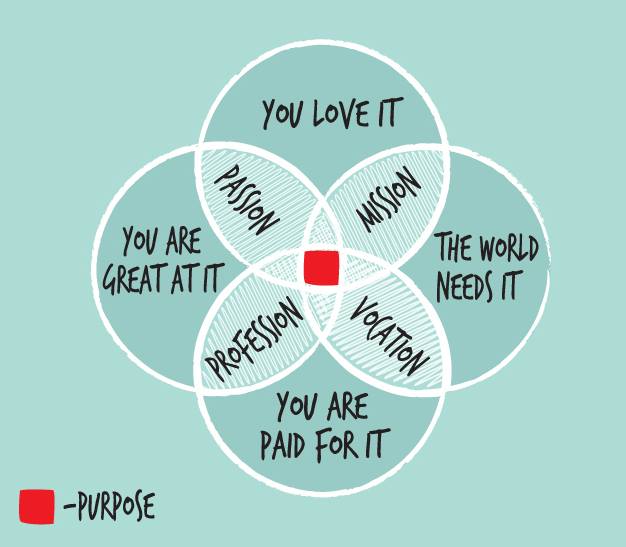
The ideal is where you get paid for doing what you love and are good at; and your customers get more time from not having to cook and enjoy food that they might never have the time or imagination to create themselves.  You could also have a positive impact on their health by creating nutritionally balanced convenient meals for them when they might otherwise eat take-ways. Or specialise in a specific customer need such as gluten intolerance, creating a focused niche for yourself, with cookery workshops as an additional revenue stream.

From factory assembly worker in a company to flat-pack furniture assembler in other people’s homes

I hate buying flat-packs and assembling the bits into a piece of furniture – it makes me stressed and takes too long. I found a handyman who specialises in assembling flat-pack furniture in double quick time. He has made a career out of what he is excellent at and something that other people hate and are happy to pay him for. His specific skill, something he does naturally, is really useful to busy people who haven’t got the time, patience and interest to do it.

From dog lover to dog walker

If you love dogs and are happy to take them for walks, rain or shine, you can use this skill and passion to earn a living as a dog walker. A friend of mine loves dogs and has 8 horses so she is outside most of the day.

She looks after the dog of someone who commutes to London during the week and gets paid for it. An extra dog makes little difference to her as she has two dogs of her own.  She gets paid for what she already does, the dog’s owner has peace of mind that his dog is well cared for, and the dog has a fantastic time outside with other dogs, rather than being stuck inside by itself or taken out just once a day for a walk.  She is more than a dog walker she is a dog nanny!

What next?

If you are at a major career crossroads and thinking about changing career direction, becoming self-employed or developing a portfolio career, we can help.

Why not get in touch to arrange your free no obligation meeting?https://www.inspiringportfoliocareers.com/contact-us/

Save the dates! Coming soon.

Energise seminars to help you to market yourself.

10-12 Tuesday 11 May 2021 on Zoom: “Why me? What value do you bring?” https://www.eventbrite.co.uk/e/marketing-seminar-why-me-what-value-do-you-bring-tickets-149507654419

10-12 Tuesday 15 June 2021 on Zoom. “Marketing me: Proactive marketing.”

Contact us to find out more: https://www.inspiringportfoliocareers.com/contact-us/

Filed Under: Transferable skills Tagged With: energise - the talent liberation company, rachel brushfield, transferable skills

  • « Go to Previous Page
  • Go to page 1
  • Go to page 2
  • Go to page 3
  • Go to page 4
  • Go to page 5
  • Interim pages omitted …
  • Go to page 37
  • Go to Next Page »

Primary Sidebar

Sign Up for Our Newsletter

Privacy by SafeUnsubscribe

Looking for something?

  • Being
  • Career agility
  • Career capital
  • Career change
  • Career coaching
  • Career fulfilment
  • Career prospects
  • Career satisfaction
  • Career strategy and planning
  • Change and uncertainty
  • Clarity
  • Confidence
  • Contracting and interim
  • Creativity
  • Diversity & inclusion
  • Emotonal intelligence
  • Employee engagement
  • Employment law
  • Entrepreneurial
  • Evolving a business
  • Fear
  • Flexible working
  • Freelance
  • Future-proof your career
  • Goals
  • Guest blog portfolio career
  • Habits
  • Happiness
  • Health
  • Hobby becoming a business
  • Interviews
  • Learning
  • Managing emotions
  • Marketing and selling
  • Money and abundance
  • Motivation
  • Networking
  • New year
  • NLP
  • Optimism
  • Performance
  • Personal brand
  • Personal development
  • Portfolio career
  • Productivity
  • Redundancy
  • Reflection
  • Relationships
  • Resilience
  • Retirement
  • Returners
  • Second careers
  • Self employment
  • skills
  • Small businesses
  • Social business
  • Social media
  • Starting a business
  • Stress
  • Success at work
  • Supporting our network
  • Talent management
  • Thought leadership
  • Transferable skills
  • Uncategorized
  • Unretirement
  • Vaues
  • Women
  • Work
  • Work life balance
  • Work trends
  • Working mothers

On Twitter

Twitter Sent An Error: Could not authenticate you.
  • Facebook
  • LinkedIn
  • Twitter
  • Website Terms & Conditions
  • Cookie Policy
  • Privacy Policy

+ 44 (0) 845 22 55 010
rachel@inspiringportfoliocareers.com

Copyright © 2026 Inspiring Portfolio Careers from Energise, The Talent Liberation Company · Site Design by DigitalJen ·

We use cookies to ensure that we give you the best experience on our website. If you continue to use this site we will assume that you are happy with it.