
Energise Future-Proof Your Career Summer School.
6-week Summer School to create peace of mind in an uncertain world. Starts 12-1pm Tuesday 29 July 2020. Book now – limited places.
See EventBrite link for details:

From Energise - The Talent Liberation Company
Energise Future-Proof Your Career Summer School.
6-week Summer School to create peace of mind in an uncertain world. Starts 12-1pm Tuesday 29 July 2020. Book now – limited places.
See EventBrite link for details:

Career crossroads? FREE event: ‘How to future-proof your career and take control of your career.’ 12-1pm Tuesday 14 July 2020. Book now: https://www.eventbrite.co.uk/e/how-to-future-proof-your-career-and-take-control-of-your-career-tickets-112334852568
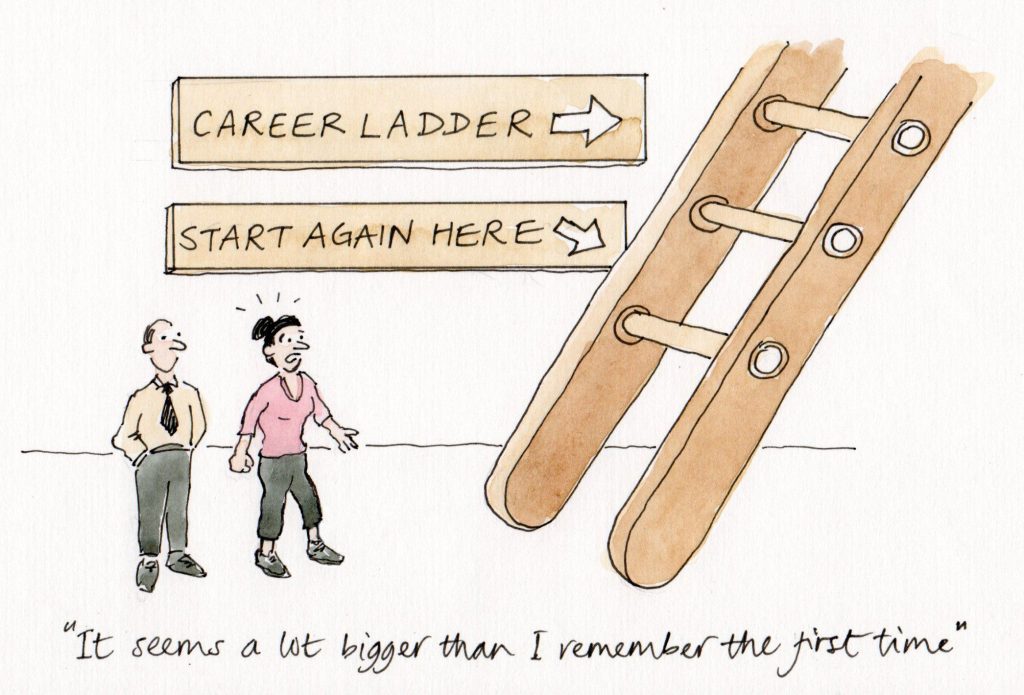
Many people at the moment, because of shrinking sectors are being forced to rethink their careers. They may have been with the same company or in the same profession for their whole lives, so this can feel very very daunting.
In times of economic growth, I help people change career direction because they want to, e.g. for better work life balance, to have more fulfilling work, or to turn an enjoyable hobby into paid work.
I also have alot of experience of helping people reinvent themselves, because they have to, i.e. redundancy. My company was one of the first to be awarded a contract to do ‘Steer your career’ workshops after the credit crunch in 2007/2008, so we have lots of experience to support people being made redundant at this time.
I have also done many career events and workshops for membership organisations including the Law Society, ICAEW and the Chartered Institute of Personnel Development (CIPD) on portfolio careers, career reinvention, career strategy, personal branding to name a few.
I love career reinvention because it is helping people to see what they find it hard to see themselves as they are too close and seeing their confidence grow as they work out what they are going to do and how they are going to make it happen, with my support.

Career coaching is both practical and creative. One of my favourite client briefs is starting with a ‘blank sheet of paper’ i.e. a client who doesn’t know what else they could do, but do know that they have to or want to reinvent themselves in their career.
I have reinvented my own career. See my LinkedIn profile for detail: Rachel Brushfield’s LinkedIn profile
Often my career coaching clients feel that they are ’one trick ponies’ having done the same thing for years, when actually they have hugely transferable skills and just need help to see this and to market themselves, as they feel rusty, not having updated their CV or had an interview in ages.

My clients’ career reinvention transitions include:
There are many barriers in people’s minds to career change, some actual and some perceived:
· Fear of change/uncertainty
· Resistance from partners, peers or parents
· Worrying about money, making the wrong decision or taking a step down the ladder having worked so hard to progress up it
· Not knowing what you don’t know
· Being in the dark about how to find out about new options
· Believing they are ‘too old’ to change
· Pleasing others e.g. parents living their lives through their children’s success instead of focusing on their happiness
· Lack of time

· Not wanting to let go of a benefit of the current job e.g. being admired at parties for being a Doctor
1. Research employment growth areas; sectors and jobs
2. Think about when you have felt most alive and fulfilled in your work and how you can have more of this
3. Source examples of achievements and initiatives from outside your career to demonstrate your marketability
4. Think your career change through thoroughly and create a long term vision with small short term steps
5. Make time regularly to make your change happen
6. Research your options and ensure they will give you what’s important to you e.g. security, learning or challenge
7. Consider retraining and acquiring new skills to become more marketable
8. Analyse what makes you distinctive to other people in your field – that unique combination of your skills, qualities and life and work experiences – this is your unique ‘brand’

9. Speak to people already doing what you want to do to get inside knowledge
10. Be creative about how you can get experience to prove your capability and demonstrate the transferability of your skills in a new area e.g. do voluntary work, help out a friend’s business etc
11. Enlist the support of an experienced career coach
“Energise helped me focus on my strengths at a very negative time for me, during redundancy. I found the whole process very rewarding.”
“Coaching has given me extra confidence. The process was very rewarding. The CV now looks punchier, and I feel ME again.”
“Coaching with Energise has given me choices, freedom and liberation.”
“Coaching gave me an objective, practical and understanding sounding board when I needed to get my life back in gear again. It really is a personal service that works around who you really are and what you really want to do. “
“Coaching gave me a positive attitude, confidence and insight. It has been instrumental in my success and by setting targets and deadlines it has speeded up the whole process of finding another job.”

How are you feeling about the ‘R’ word?
If you are over 40, then you will remember the late 1980’s/early 1990’s when redundancy and negative equity were commonplace.
I was made redundant in the late 80’s. It was very stressful at the time, but a problem became an opportunity as it was the beginning of my career going in a direction that was more true to me.
I used my redundancy money to pay off my debts and give my discoloured teeth ‘a face lift’ with some porcelain veneer crowns, so redundancy ironically helped put the smile back on my face!!!
All the clients I have ever worked with who have been made redundant have gone on to something better. Did you know that only 20% of people actually enjoy their work?
Often we fall into a job almost by accident, choose a career because our parents did it or thought it a ‘proper’ profession e.g. law or accountancy, or perhaps a teacher influenced our choices.
Companies can take a short-term view of saving costs, cutting headcount without considering the longer-term implications of losing people or having a talent shortage post recession.
If redundancy is a possibility for you, it’s worth having a chat with your employer about your skills being redeployed in the business differently, reducing your hours, or having a sabbatical.
Redundancy can be a push to make a positive change, even if it feels out of your hands and more like an unwelcome shove that makes you angry and steals your confidence. A redundancy lump sum is often used to start a business or fund a training course to increase marketability.
A skills shortage is an opportunity for people being made redundant to skill-up in the areas where there is a shortage. Sheep shearing or being a trained ballet dancer may not be your thing, but jobs such as an engineer, maths teacher or specialist nurses could be. Markets such as care homes, tech, big data and cyber security are growing for example.
Part of my role as a career strategist and coach is keeping up to date with changing trends – in demand skills and new emerging careers.
The British are very modest and people get so close to ourselves that we find it hard to see what makes us unique and marketable and how we can use these transferable skills in a different way. I can help.
The older we are and the more financial responsibilities and dependants we have, the harder and more risky the change feels.
A career crossroads is a positive opportunity to take a step back and look at who you are, what you want and how to get it.
We help our clients to achieve an uplifting breakthrough at major career crossroads such as redundancy, and have been doing career strategy coaching for over two decades.
How can we help you or someone you know at risk of redundancy?
Get in touch https://www.inspiringportfoliocareers.com/portfolio/connect/

It is vital in uncertain times to have career ‘insurance’ – a plan ‘A’, ‘B’ and ‘C’ for your career.
Do you?
Not having an insurance policy for your career is like driving a car in winter with only one headlight, a 10 year old map, a nearly empty tank of petrol with no spare petrol can in the boot and with one wing mirror hanging off.
You wouldn’t, would you?
Why then, do most people do the equivalent with their career?
You only have to look at what has happened during the coronavirus period to see the danger of how fast a sector can change.
So – what’s your career plan ‘A’, ‘B’ and ‘C’?
Reasons for neglecting this vital area include:
· Fear: Of feeling regret and disappointment
· Time poor: Let other’s needs take precedence
· Overwhelm: Don’t know where to start
· Empty toolbox: Don’t have the tools and frameworks
· Short termism: Focus on the here and now
· Life stage: Feel no point with other life priorities
· Habit: Fell into a career and leave it to chance
· Resigned: Don’t feel deserve anything better/different
· Unaware: Never done any personal development
· Blinkered: In the dark about the fast changing world of work
Do you relate to any of these? What additional factors would you add?
“The best way to create the future is to invent it.” Alan Kay.
What 1 action can I take straight away that would most help my future career security & prospects?”
1. Support: enlist an experienced career coach
2. Headspace: book a career retreat/away day
3. Think: replace mindless time frittering e.g. FaceBook
4. Focus: write your ideal role/career description & plan ‘A’, ‘B’ & ‘C’
5. Habit: make ‘dead’ time fruitful e.g. a commute to create options
6. Prioritise: ring fence a monthly time slot & budget
7. Informed: look inwards (self-awareness) & outwards (trends)
What tips would you add?
Get in touch https://www.inspiringportfoliocareers.com/portfolio/connect/

“Happiness is not a destination, it is a method of life” Burton Hills
One of the most important things in life, in my opinion, is to live your life based on what’s important to you – your values.
So many people live life to other people’s agendas and values, whether it’s parents, teachers or society as a whole. This means that they are not being true to themselves. It’s not selfish to be true to yourself, it is wise, because if you are happy within yourself, you have more to give back to other people.
On aeroplanes they say “Put the oxygen mask on your own face first” – same principle.
Insights about values a key part of career change
Helping people understand their values is one of the key things I help clients with and then we design goals around these values. Everyone has different values, not better not worse, just different. I find that often people are feeling ‘out of sorts’ or unfulfilled in their careers because they are not honouring their values, i.e. what’s important to them.
When values aren’t honoured
Values not being honoured shows up in different ways. For example they have a partner for whom different things are important or their employer values tradition when they value modern. People can have the same value e.g. love but it’s honoured in a different way; one partner may like to hear their partner say that they love them 25 times a day, the other partner likes being hugged to feel loved.
Relationship issues are often about different values
One of the reasons that relationship issues come up all the time when I coach people is because different people have different values, but they haven’t articulated them. This is what causes the tension – not articulating/understanding values.
Check in with your values
I find values are a useful check-in. If I am feeling frustrated with a person or situation, it’s normally because one of my values is being trodden on. If I am lied to, my Honesty value isn’t honoured, if I feel forced to do something against my will, my Right to choose value is squashed. It’s like a framework to help make sense of life and to deal with difficult emotions. An inner compass.
Corporate values
The Credit crunch of 2007/2008 has taught us to question what we used to trust without question. Companies have values too and the good companies live and breathe them through their behaviour and how they act. They don’t just stick a list of words on the corporate wall like integrity, honesty, success and fun.
Clashing values – inner tug of war
Sometimes an individual has clashing values – it’s like having an inner tug of war. Freedom and Belonging is one example; part of you wants to be part of something but most of you wants to feel free, a direct inner conflict. Another example is Security and Adventure; part of you needs security and another part wants to break out and be adventurous. Understanding and managing your conflicting values is vital, especially in uncertain and challenging times.
Honour your values to stay centred
Without wishing to state the obvious, the post coronavirus period we are now living in are challenging times.
If you do one thing and one thing only, honour the things that are important to you and make sure that the people you care about are able to honour the things important to them.
10 tips to live your values
1) Think about what’s really important to you
2) Reflect on times in your life when you felt really frustrated – what was the cause?
3) Get a coach to help you understand your values
4) When you have a difference of opinion with people at work/home – analyse what value isn’t being honoured
5) Picture your ideal life – what would it be like?
6) Think about people you really connect with, What is it about them that works?
7) Be specific in your articulation of your values e.g. Expressing and demonstrating kindness rather than just Kindness
8) Explore whether your values are compatible before committing to a long term partner or employer
9) Prepare incisive questions to get a potential employer to give examples to demonstrate their values and culture as part of your interview.
10) Make a date with yourself and check in every month to review to what extent you have honoured what’s important to you
How can we help you? Get in touch.

Over 23 years ago, a book by Charles Handy The age of unreason inspired me to start my own business. He was ahead of his time in his thinking about how work would change and is an example of a ‘thought leader.’ I have often thought of this book in recent weeks, observing the world of work change very rapidly due to the coronavirus.
Charles Handy was and is a thought leader.
How is thought leadership useful?
Thought leadership can help you market yourself and stand out in a crowded and competitive market place. Many markets are becoming crowded and more competitive. In a global economy with the Internet, this was inevitable.
What is a thought leader?
“A distinguishing characteristic of a thought leader is the recognition from the outside world that the company deeply understands its business, the needs of its customers and the broader marketplace in which it operates.” Elise Bauer.
Thought leadership is ideal for lock-down!
In our digital world and the knowledge age we live in, thought leadership can make you visible to millions. What you write or record needs to be worth reading/listening to/watching, so making time to keep up to date with trends and contemplation is essential.
Alot of content is being shared by millions around the world, so it needs to be good quality to stand out.
Content marketing
Thought leadership is part of content marketing.
Thought leadership is all about knowledge expertise, creating useful content and giving some of it away freely – this is key to success.
To catch a fish, whether a job or paid projects as a self employed person, thought leadership is like a ‘worm on the hook’.
The ocean is the whole world as a result of the World Wide Web which is an exciting if sometimes overwhelming prospect. By writing articles, blogging, creating videos and podcasts, and doing conference speeches and webinars, you can attract your target audience and opportunities to you.
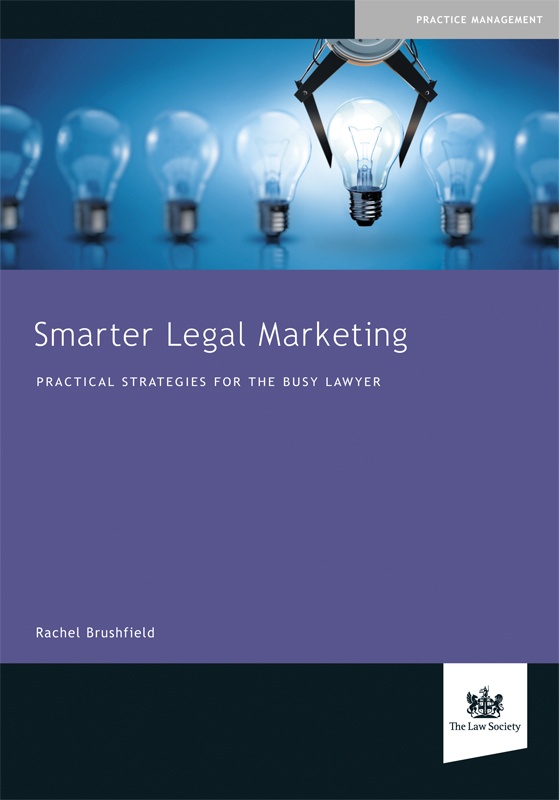
Indeed, content marketing formed a whole chapter of an 8 chapter book I wrote for the Law Society:
Smarter Legal Marketing. Practical Strategies for the Busy Lawyer
Self reflective question
How could thought leadership help my career?
I love researching a new topic, learning and then sharing the learning to help others.
My mother once dedicated her first fiction book to me: “To Rachel, who always wants to know more.”
Being naturally curious, this Ellen Parr quote below is one of my favourite quotes!!
Inspiring quote
“The cure for boredom is curiosity. There is no cure for curiosity.”
Ellen Parr
Five tips to develop thought leadership
1) What topics are you really interested in to develop your thought leadership?
2) Do a Google search on ‘thought leadership’ and your current/desired specialism. List 3 possible ideas.
3) Make sure you have clearly defined your personal brand, as it will make developing your thought leadership space easier.
4) Review Malcolm Gladwell’s and Seth Godin’s content – how do they achieve thought leadership?
5) Choose a medium that suits you e.g. if you love writing, write. If you prefer speaking, do podcasts, or create a video.
Read our testimonials for writing (section 4) https://liberateyourtalent.wordpress.com/energise-client-testimonials/
Writing, both paid and unpaid, has been a very strong thread throughout my career – books, chapters, articles, blogs, magazine columns, content creation etc.
Interested in developing your thought leadership? Get in touch. https://www.inspiringportfoliocareers.com/portfolio/connect/

Some of our clients have been unhappy at work for up to 10 years before they contact us and in some cases, have are ill having resisting the change that they need to make – they are so ready for change.
The outcome for some of our other clients is that they choose to stay put rather than change career, and improve what they can influence where they are.
In a challenging jobs market with increasing uncertainty, taking responsibility for your career is not something you can afford to ignore.
What’s stopping me from making the change I seek from work a reality?
What’s the question I most need to ask myself?
Get in touch https://www.inspiringportfoliocareers.com/portfolio/connect/

More competition for jobs and consultancy work makes being entrepreneurial as well as resilient essential.
The word entrepreneurial can make people put pressure on themselves, as it is associated with entrepreneurs, and many people don’t identify themselves in this way.
Alternative words for entrepreneurial
Other words that you can use instead of ‘entrepreneurial’ that may feel more ‘you’ are:
Coronavirus has forced entrepreneurial behaviour
The coronavirus has seen a massive amount of fast change and reinvention with on-line learning and teaching, for example.
Our local pub is planning to re-open in July re-organised to accommodate social distancing with an App to pre-book tables and pre order and pay for food and drinks. Food and drinks will be placed in a holding bay, for people sitting at tables to collect themselves, protecting the staff and minimising touch and risk of infection, instead of staff serving at the tables. This system will also enable more planning, and perhaps less waste, with prior knowledge of what ingredients are needed and in what quantity.
Invention and innovation
Entrepreneurial behaviour underlies the inclination to undertake invention and innovation, including the creation of something new, as well as the distribution and adoption of the new throughout society. Think Zoom and Team which are now the norm, when a few months ago, not everyone had heard of or used them.
Portfolio careers require entrepreneurial behaviour
Entrepreneurial behaviours are essential with a portfolio career, a career made up of different work strands, where you create different opportunities for yourself. As an analogy, just as with cookery, the more ingredients that you have – skills, experience, knowledge and contacts, the more ‘recipes’ you can create for yourself.
What are entrepreneurial behaviours?
Confident/’can do’ attitude
Proactivity
Learning
A mistake/failure is an opportunity to learn/relearn
Try different things
Curiosity
Assertiveness
Being inventive/enterprising
Resilient
A preference for change
Desire to change the status quo
How would you rate yourself currently on these entrepreneurial behaviours out of 100%?
Developing entrepreneurial habits helps to develop entrepreneurial behaviours.
10 habits of entrepreneurs
What are the habits of entrepreneurs?
1. Plan a day in advance
2. Get proper nutrition
3. Position themselves to serve others
4. Set clear S.M.A.R.T. goals
5. Take calculated risks
6. Know their strengths and weaknesses
7. Hire ‘A’ team players
8. Are constantly learning
9. Always look for opportunities
10. Evaluate their actions and priorities every day
6 tips to develop your entrepreneurial ‘muscle’
6. Push out your comfort zone each week – do something that you have never done before
Get in touch https://www.inspiringportfoliocareers.com/portfolio/connect/

A common theme amongst all of the career coaching clients I work with is a) they have a blind spot seeing their own skills and talents and b) how they can use them in other ways, i.e. possible new jobs or different careers to what they have done before.
I act as a pair of ‘wing mirrors’ to help them see their skills and be clear about where else they can use them.
In these times of redundancies and shrinking sectors caused by the impact of the coronavirus, this is a very important area to explore as part of your future-proof career.
A skill is defined as: “cleverness at doing a thing, either from practice or a natural gift.”
Most people don’t think of themselves in terms of skills, and find it immodest to talk about their own ‘natural gifts’.
Common phrases that people express are: “I just do my job” or “it’s just what I do.”
It is not surprising therefore that people need support in seeing new career options for themselves.
People are discouraged from saying that they are clever and our specific and unique talents are rarely acknowledged or recognised by others. Other people may have thought about you are good at, but not shared this information with you, so it is worth asking to elicit this useful information.
In employer engagement research, frustration about lack of feedback is a common complaint from employees about their line managers, so giving feedback to your direct reports is a good thing to do to boost morale at this time if you are a manager.
Awareness of your specific skills and the ability to articulate them, sharing tangible examples of the benefits they bring is crucial in career success, especially when you are competing against a lot of good candidates.
For people seeking a new or different career, being explicit in helping others to see how your skills are useful in a related context is a must to convince your potential employer that you are up to the task, and not a risk. Self-awareness, confidence and the ability to market yourself, plus overcoming natural fears about change enable a change in career direction to be within reach.
What’s my best skill and in what other contexts is it useful?
“Believe in yourself. Have faith in your abilities. Without a humble but reasonable confidence in your own powers, you cannot be successful or happy.”
Norman Vincent Peale
1) Get someone to ask you how you do your job and to write down what you say and then share their perspective of your skills with you.
2) Think about something you do well naturally and write down the specifics using the third person. Practice saying “I am really good at, for example when ….” This makes it feel more comfortable and not ‘boastful.’
3) Analyse the ‘process’ you use to do your work step by step. Most people have a process incorporating certain skills but don’t see this, as they are too close to themselves. This can be turned into a model or infographic to use on your CV, on social media or on a personal web site.
4) Ask people you work with or live with for feedback about your specific skills and do the same for them.
5) If you want to fast track your awareness, get a career coach who is trained to see your skills and help you to see opportunities where they are useful that you may be unaware even existed.
To receive a free report Personal Skills Audit, please get in touch: https://www.inspiringportfoliocareers.com/portfolio/connect/