• Menu
  • Skip to primary navigation
  • Skip to secondary navigation
  • Skip to main content
  • Skip to primary sidebar

Inspiring Portfolio Careers

From Energise - The Talent Liberation Company

  • Home
  • You
    • Why choose a portfolio career?
    • Who is a portfolio career for?
    • What is a portfolio career?
    • When is it time for a portfolio career?
  • Us
    • Why choose us?
    • What is our approach?
    • What are our values?
    • Who are our clients?
  • Services
    • On-line programmes
    • Career Coaching
    • E-Course
    • Skills CV Design
    • Marketing Mentoring
    • Personal Branding
    • Booking
  • Inspiration
  • Testimonials
  • Blog
  • Contact Us
  • Website Terms & Conditions
  • Cookie Policy
  • Privacy Policy
  • Home
  • You
    • Why choose a portfolio career?
    • Who is a portfolio career for?
    • What is a portfolio career?
    • When is it time for a portfolio career?
  • Us
    • Why choose us?
    • What is our approach?
    • What are our values?
    • Who are our clients?
  • Services
    • On-line programmes
    • Career Coaching
    • E-Course
    • Skills CV Design
    • Marketing Mentoring
    • Personal Branding
    • Booking
  • Inspiration
  • Testimonials
  • Blog
  • Contact Us
You are here: Home / Archives for retirement

retirement

Time to retire? Part 2 of 2.

February 15, 2021 By //  by Rachel Brushfield

Read part 1:

https://www.inspiringportfoliocareers.com/time-to-retire-part-1-of-2/

How career coaching helped preparation for retirement

We recommended three coaching sessions to help our clients plan their retirement.

During the first coaching session, we explored their situation fully and discussed any short and long term plans that they had.  

It was important to establish quickly how they felt about retiring and to discuss the main issues and challenges that they were facing or likely to encounter in the first few weeks and months of retirement.

Taking stock

It is useful to help our clients to take stock of where they are from a personality, values (what is important to them), motivations and interests perspective.

Next to support them to do some thinking and planning to help them set achievable goals together with some budget planning. 

The second and third coaching sessions were used to track their progress against the agreed goals and to provide mentoring support as a strategic, practical and confidential sounding board.

As with all career coaching, the client needs to take ownership of their plan and drive it forward themselves, blocking out time regularly.

Focus for career coaching

Assessing why and where they thought they would specifically need career coaching is important. Our approach is bespoke – a high quality boutique service.

What we didn’t cover

Their career coaching did not cover detailed financial, pension and investment planning. They needed specialist help on this and we suggested that they obtained separate advice from an Independent Financial Advisor (IFA). We recommended a trusted contact.

The focus of career coaching was getting them into the right mindset to deal with the “change curve” of retirement and to then give them a practical focus and clear plan to use their main life interests and preferred activities productively whilst managing their time effectively. 

Career coaching exercises

To enable clarity and insights to inform their retirement, they completed a series of exercises on personality, temperament, career motivations and a strengths profile to help them understand themselves and their preferred ways of doing things. 

They had not completed anything like these before and found them extremely helpful and illuminating.

We discussed the insights from these and, for them, the personal and practical implications for their future.

Getting retirement ready

For example:

  • structure being important
  • not being naturally organised
  • wanting to achieve too much
  • having no system to prioritise actions
  • lack of self-discipline

are things that need to be thought through.

These were pivotal exercises to complete prior to the follow up work which they agreed to do.

Retirement planning guidance

We recommended several sources of retirement guidance material and pointed them towards other relevant material to read online.  They also had a copy of our Retirement Career Plan to help them.

Career coaching skills

Career coaching skills including listening, incisive questioning, coaching, counselling, challenging and action planning.

We introduced them to other areas including personal networking, research and looking at where they could build up other skills or do some further development activity.  

With one client, we also looked at building in some voluntary work as a key part of their new life and plan. 

The Result

The sessions were well received and both clients gave positive feedback.

A few weeks later, they individually reported that they were settling into their retirement well and were starting to achieve their defined S.M.A.R.T. goals – lifestyle, development, personal and financial.  

More

Contact us to arrange your free 20 minute no-obligation meeting to explore your brief and how we can help: https://www.inspiringportfoliocareers.com/contact-us/

Andrew J Scott + Lynda Gratton ‘The 100 year life’ https://www.amazon.co.uk/100-Year-Life-Living-working-longevity/dp/1472930150

Andrew J Scott and Lynda Gratton ‘The new long life’ https://www.amazon.co.uk/New-Long-Life-Framework-Flourishing/dp/1526615169/r

Institute of Employment Studies (IES): ‘Shut out. How employers and recruiters are overlooking the talents of the over 50 workers.” January 2021. Centre for better aging. https://www.employment-studies.co.uk/resource/shut-out?utm_source=IES+emailing+list&utm_campaign=2b4e9e35ad-EMAIL_CAMPAIGN_2019_05_10_10_39_COPY_08&utm_medium=email&utm_term=0_f11585705b-2b4e9e35ad-364290580


Filed Under: Retirement Tagged With: energise - the talent liberation company, retirement

Time to retire? Part 1 of 2.

February 15, 2021 By //  by Rachel Brushfield

In the UK, the population is aging, with many people set to retire.

Most people typically having set up a pension in their 20’s or 30’s, don’t think about what they will do in their retirement until they are in their late 50’s or early 60’s, unless ill-health causes them to retire earlier than they planned, or they are offered voluntary redundancy.

We don’t get taught how to plan for retirement, and the sudden abrupt ‘stop’ or ‘steep’ cliff has never felt wise or logical, for either the employer or employee!

Planning retirement is very important, and working with an experienced career coach can really help to smooth this major life transition.

Is a steep ‘cliff’ or sudden stop to retirement wise?

A gentle ‘slope’ to retirement, reducing working hours, and increasing leisure time and volunteering, and for some, having a portfolio career with a mix of paid and unpaid activities has always felt better sense.

Why stop work suddenly, just because you have reached a particular age?

A gentle slope to retirement paces change.

Client examples

A couple of coaching clients were both approaching retirement age and looking to retire fully when they first got in touch about career coaching.

They did not know how to go about planning their retirement in order to ensure a smooth transition from working full time in an office (pre-Covid) to their new life, primarily based at home.

In both cases, they had both been working in their organisations for a number of years in technical roles and were now leaving with no intention of doing any further paid work. 

Covid-19

Working from home because of Covid-19 in some ways has enabled an adjustment from working in an office and commuting, paving the way to adjust to a retired life, and being more home based.

Pacing change makes a lot of sense.

No prior retirement preparation

What was interesting and also surprising was to learn just how unprepared they were for this next step in their life.

They had received no pre-retirement advice at all from their employers (except to secure career coaching help), had not spoken to an Independent Financial Advisor (IFA) about financial planning and had little idea what they were going to do with their time once they retired.

It was clear that they had not thought about how they would cope without working, no longer having the structure and support of a full-time job, and they hasn’t started to make any concrete plans.

For experienced career coaches like us, this is a fabulous brief – almost like having a blank canvas to work with!

5 stages of retirement

There are 5 stages of retirement.

Stage 1: Pre-Retirement. The stage before you actually retire involves imagining your new life and planning for it.

Stage 2: Full Retirement.

Stage 3: Disenchantment with retirement.

Stage 4: Reorientation.

Stage 5: Reconciliation & Stability.

Sometimes people choose to come out of retirement and develop a portfolio career at stage 3.

If you love your work, why retire? A slower pace and reduced working hours can be a good choice.

More

Contact us to arrange your free 20 minute no obligation meeting: https://www.inspiringportfoliocareers.com/contact-us/

Recommended reading:

Andrew J Scott + Lynda Gratton ‘The 100 year life’ 

https://www.amazon.co.uk/100-Year-Life-Living-working-longevity/dp/1472930150

Andrew J Scott and Lynda Gratton ‘The new long life’ https://www.amazon.co.uk/New-Long-Life-Framework-Flourishing/dp/1526615169/r

Report Institute of Employment Studies (IES)

‘Shut out. How employers and recruiters are overlooking the talents of the over 50 workers.” January 2021. Centre for better aging. https://www.employment-studies.co.uk/resource/shut-out?utm_source=IES+emailing+list&utm_campaign=2b4e9e35ad-EMAIL_CAMPAIGN_2019_05_10_10_39_COPY_08&utm_medium=email&utm_term=0_f11585705b-2b4e9e35ad-364290580

Filed Under: Retirement Tagged With: retirement, the talent liberator

Ready to be ‘put out to grass’? Or not! Part 1 of 2.

February 3, 2021 By //  by Rachel Brushfield

This is a 2-part blog by Peter Wilford about supporting Finance Directors to consider about retiring or not. This is part 1.

The rest of this blog is in Peter’s own words.

Context of this blog

I have worked with a number of Finance Directors, FCA qualified, mostly in their 50’s, who had left their last company, either through redundancy or via a mutual settlement agreement. 

They had been provided with a set number of hours and sessions of dedicated outplacement support, the term for ‘career coaching’ provided by organisations making staff redundant and through a benevolent fund, and I was their chosen career coach.

Initial issues and challenges

In every single case, my clients said that they had no wish to retire from work yet.

Many said that they could retire if they chose with their strong pension portfolios and other investments.

They were all uncertain about their options next after having had long and successful commercial careers.

Exiting corporate life is a major career crossroads.  Working with an experienced career coach is invaluable at this crucial decision point. Especially an experienced one, who has worked with many senior executives.

Lack of awareness of transferable skills.

In almost every case, they had no clear appreciation of:

  • their transferable skills
  • how the job market worked
  • where their options lay within finance
  • and outside finance.

Of course, they hadn’t needed to!

This can be a very daunting experience for people who have always worked in one profession.

You can only know what you know!

They had been siloed and sheltered working in the corporate world for many years and were now thrust into the open, in effect a boat without a captain to steer it, with no route planned and no rudder.

This can create a crisis of confidence and be stressful – venturing into the unknown!

Career options

Becoming a non-executive director (NED) is a common option considered at this point.

Also doing some voluntary or charity work and enjoying a slower pace of life and improved work life balance. A portfolio career can provide a gentle ‘slope’ to retirement, rather than a sudden ‘cliff’ stopping a long working life abruptly, just because they had reached a certain age.

Almost without exception, they all wanted to move on from working with large organisations and away from the ‘corporate treadmill’.

Lack of awareness about their brand and marketability

Few had any real appreciation of their USP (unique selling proposition) i.e. what made them unique in the market place.

Even fewer had clarity about a target organisation that they would like to work with, and how to go about marketing how they could help, or what services they could offer of value.

A common view, perhaps because they had been in the structure of corporate life,

Some had a degree of arrogance mixed with naivety that they would ‘get something soon’. This is not a criticism, just a consequence of having been ‘cushioned’ in corporate life.

Lead time to create a new role

I had to point out to them, that most people will take 18 months on average, to secure their first non-executive director (NED) role.

Also, that if they wanted to do interim/contract work, the key issue in the mind of the interim recruiter would be “has he or she done interim work before?” and that in reality those who had would be on top of the pile of shortlisted candidates.

In the current Covid-19 market in 2021, recruitment lead times are longer, with companies risk-averse about increasing fixed costs. They also have a large pool of high quality candidates from which to choose from.

Interpersonal skills

Interpersonal skills are a pre-requisite for success and are becoming more important with the advent of Artificial Intelligence and automation, predicted to increase massively in the next 5 years.

Many Financial Directors (FDs) and senior Finance professionals are brilliant at numeracy and numbers.

Words and people are, understandably, not their best strength.

Also, whilst they bring commerciality, few are competent at marketing themselves. They have never had to.

Like lawyers, FDs, are qualified and trained to do a specific job, from their early career, and in the past this has not included pitching. 

One or two of my clients have been the exception to this norm and they have invariably secured commercial work more easily, possessing this experience, securing both full and part time roles.

Compelling CV and achievements

Some FD’s had some semblance of a CV, few have though about and been able to articulate strong and compelling achievements.

I had not expected them to know about a Skills CV and where and why they should have it in their ‘marketing tool kit’. All of them quickly saw its benefit, especially when approaching the unadvertised job market.

The beginning of the career coaching journey

Because of the above factors, the starting point of career coaching therefore, is ‘starting from scratch’ and having a conversation about their career and what they had accomplished. 

Pitching themselves

Many FD’s were not used to or skilled at pitching, and many were poor at networking or rusty at it.

This was because they had not needed to do it in their corporate careers, or because they just didn’t have the natural personality and / or the skills to identify and grow their network.

We had to work together on this as we did on giving them a proactive LinkedIn profile.

Part 2 of this 2 part blog ‘Ready to be ‘put out to grass’? Or not! Part 1 of 2.’

More

‘The 100 year life’ by Lynda Gratton and Andrew J Scott: http://www.100yearlife.com/

‘The new long life’ by Lynda Gratton and Andrew J Scott: https://thenewlonglife.com/

Peter Wilford’s LinkedIn profile: https://www.linkedin.com/in/peterwilford/

Client testimonials: https://www.inspiringportfoliocareers.com/testimonials/

Why choose us? https://www.inspiringportfoliocareers.com/talent-liberation/

Blog – How does career coaching work? https://www.inspiringportfoliocareers.com/how-does-career-coaching-work/

Filed Under: Portfolio career, Retirement Tagged With: career coaching, financial director, major career crossroads, portfolio career, retirement

Guest blog Barrie Hopson part 1

August 16, 2016 By //  by Rachel Brushfield

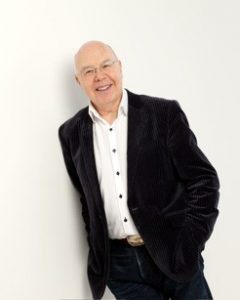
Barrie Hopson

This is a 2 part guest blog by Barrie Hopson. This is Part 1.

Barrie is a psychologist specialising in career development and lifelong learning and is a serial entrepreneur. His life mission is helping people to become architects of their own future. His latest project is writing and developing an online learning programme to help people design a retirement that they will love. Sponsored by Aviva and free to use. www.livehappier.co.uk

He is a Non Exec Director of the Aspire-Igen Group and of Disability Sport Yorkshire. He chairs the national Quality in Career Standard Consortium Board. He was Chairman of Axia Interactive Media 2007-2013. He is a writer, presenter, consultant and was chair of his local community association for 8 years. He is on the advisory board of The Open Retirement Club. He is a Fellow of the British Psychological Society and of the Royal Society of Arts. He has written 39 books – the latest being ‘And What Do You Do? 10 Steps to Creating a Portfolio Career’, written with Katie Ledger. He gives presentations on the future of work, portfolio careers, and how to ‘design a retirement you’ll love’. He established the Counselling and Career Development Unit at Leeds University in 1976 and went on to found Lifeskills International in 1983. The company formed a joint venture – Hay-Lifeskills Ltd. – with Hay Group International of which he was co-chair for its first 3 years. His books include the bestselling 12 Steps to Success through Service, The Lifeskills Teaching Programmes and Build Your Own Rainbow. In 2008 he wrote The Rainbow Years: the Pluses of Being 50+ and an accompanying website for Learndirect www.fiftyforward.co.uk. The latter were all co-authored with Mike Scally. Barrie has worked widely as a consultant to commercial and educational organisations in the UK, USA, Asia, Canada and Europe. He sees one of the payoffs of his Portfolio Career as being able to follow Yorkshire County Cricket Club. He adores running and runs 10k, 10 mile and half marathons for the Stroke Association as he is now a carer for his stroke survivor wife.

The rest of this blog are in Barrie’s own words.

What are the components of your portfolio career e.g. study, paid freelance work, part time job, volunteering etc.)

Psychologist, writer, presenter, NED of 2 companies, mentor, trustee of Disability Sports Yorkshire. I have just finished writing a free to use online learning programme to help people design a retirement that they love. I am currently helping to set up a social media business with the objective of eliminating childhood obesity.

How did your portfolio career come about?

I had never heard of the concept until Charles Handy ‘invented’ the term in 1993. In retrospect, I realise that from the point in my career when I got a lectureship at Leeds University in 1969, I have almost always had at least one other job or venture at the same time.

How has your portfolio career changed over time?

The biggest change was after I sold my business Lifeskills International in 1999. Since then I have really been able to indulge myself in a portfolio career. Accepting invitations to be NED in a number of companies, still continuing to write books, workbooks and online learning programmes and accepting invitations to present all over the world. I have always enjoyed helping others to develop their careers and achieve their dreams. I now have much more time to do that and I love it. I was influenced by Charles in a number of ways, not least in ensuring that I always tried to spend around 20% of my time doing unpaid work. That has now increased to around 30% including free mentoring and being a trustee for Disability Sports Yorkshire.

When people ask you ‘what do you do?’ – what do you reply?

I help people to become architects of their own future – through the companies I have run, the projects I set up, the books and learning programmes I have created, and by mentoring people to create their own dreams.

To what extent did your portfolio career happen by chance/luck and to what extent was it planned?

I have never planned anything in my life! I love the unpredictability of life and am always open to opportunities. I rely largely on gut reaction as to whether or not to do something. Occasionally that backfires, but mostly it has delivered joy, intellectual and emotional stimulation – and sufficient money!

What do you most love about having a portfolio career?

I always have to look at my calendar to see what I am doing the next day. This is not just a component of cognitive ageing!

What are the challenges of having a portfolio career?

One thing I miss dreadfully from not having a workplace to go to is the constant learning from simply sharing a space with people. This is especially so with IT. I was largely taught about computers by my PA in my company and I now realise that I miss having colleagues to turn to and ask, “how do I do this?”

Watch out for part 2 of Barrie Hopson’s guest blog, out soon.

More

For more information about portfolio careers, click on this link:

http://portfoliocareers.net/

To find out more about ‘Live Happier’, click on this link:

https://livehappier.aviva.co.uk/

To find out more about Barrie’s book about portfolio careers, click on this link:

https://www.amazon.co.uk/What-Do-You-Creating-Portfolio/dp/1408116308

Want to create your own portfolio career? Click on this link:

https://www.inspiringportfoliocareers.com/

Download your free report ‘Discover portfolio careers’:

https://www.inspiringportfoliocareers.com/who-has-portfolio-careers/

Download your free report ‘Pain free career change’:

https://www.inspiringportfoliocareers.com/testimonials/

Unsure what your transferable skills are, download your free report ‘Skills’ from this web page:

https://www.inspiringportfoliocareers.com/what-is-a-portfolio-career/

Read more guest bloggers accounts of their portfolio career:

https://www.inspiringportfoliocareers.com/blog/


Filed Under: Portfolio career Tagged With: aviva, barrie hopson, energise, live happier, portfolio careers, rachel brushfield, retirement, second careers, talent liberator, the talent liberation company

Primary Sidebar

Sign Up for Our Newsletter

Privacy by SafeUnsubscribe

Looking for something?

  • Being
  • Career agility
  • Career capital
  • Career change
  • Career coaching
  • Career fulfilment
  • Career prospects
  • Career satisfaction
  • Career strategy and planning
  • Change and uncertainty
  • Clarity
  • Confidence
  • Contracting and interim
  • Creativity
  • Diversity & inclusion
  • Emotonal intelligence
  • Employee engagement
  • Employment law
  • Entrepreneurial
  • Evolving a business
  • Fear
  • Flexible working
  • Freelance
  • Future-proof your career
  • Goals
  • Guest blog portfolio career
  • Habits
  • Happiness
  • Health
  • Hobby becoming a business
  • Interviews
  • Learning
  • Managing emotions
  • Marketing and selling
  • Money and abundance
  • Motivation
  • Networking
  • New year
  • NLP
  • Optimism
  • Performance
  • Personal brand
  • Personal development
  • Portfolio career
  • Productivity
  • Redundancy
  • Reflection
  • Relationships
  • Resilience
  • Retirement
  • Returners
  • Second careers
  • Self employment
  • skills
  • Small businesses
  • Social business
  • Social media
  • Starting a business
  • Stress
  • Success at work
  • Supporting our network
  • Talent management
  • Thought leadership
  • Transferable skills
  • Uncategorized
  • Unretirement
  • Vaues
  • Women
  • Work
  • Work life balance
  • Work trends
  • Working mothers

On Twitter

Twitter Sent An Error: Could not authenticate you.
  • Facebook
  • LinkedIn
  • Twitter
  • Website Terms & Conditions
  • Cookie Policy
  • Privacy Policy

+ 44 (0) 845 22 55 010
rachel@inspiringportfoliocareers.com

Copyright © 2026 Inspiring Portfolio Careers from Energise, The Talent Liberation Company · Site Design by DigitalJen ·

We use cookies to ensure that we give you the best experience on our website. If you continue to use this site we will assume that you are happy with it.