
• Menu
  • Skip to primary navigation
  • Skip to secondary navigation
  • Skip to main content
  • Skip to primary sidebar

Inspiring Portfolio Careers

From Energise - The Talent Liberation Company

  • Home
  • You
    • Why choose a portfolio career?
    • Who is a portfolio career for?
    • What is a portfolio career?
    • When is it time for a portfolio career?
  • Us
    • Why choose us?
    • What is our approach?
    • What are our values?
    • Who are our clients?
  • Services
    • On-line programmes
    • Career Coaching
    • E-Course
    • Skills CV Design
    • Marketing Mentoring
    • Personal Branding
    • Booking
  • Inspiration
  • Testimonials
  • Blog
  • Contact Us
  • Website Terms & Conditions
  • Cookie Policy
  • Privacy Policy
  • Home
  • You
    • Why choose a portfolio career?
    • Who is a portfolio career for?
    • What is a portfolio career?
    • When is it time for a portfolio career?
  • Us
    • Why choose us?
    • What is our approach?
    • What are our values?
    • Who are our clients?
  • Services
    • On-line programmes
    • Career Coaching
    • E-Course
    • Skills CV Design
    • Marketing Mentoring
    • Personal Branding
    • Booking
  • Inspiration
  • Testimonials
  • Blog
  • Contact Us
You are here: Home / Archives for career strategy

career strategy

What is career agility?

December 2, 2020 By //  by Rachel Brushfield

This image is one of our career coaching clients, Olivia Streater, who has a portfolio career.

http://linkedin.com/in/oliviastreaterlavizzari

What does agility mean?

The dictionary definition of agility is:

  • “the ability to move quickly and easily”
  • “the ability to think and understand quickly”
  • “the skills of pivoting quickly”

Until I looked up the definition of agility, I had always associated the word just with the physical, not the brain and thinking.

Impact of Covid-19 on accelerating change

Covid-19 and its impact on businesses has been a great example of agility at work!

Things that would have taken a long time to change, possibly 100 years, have happened in a matter of just months through necessity.

Pain is often a catalyst for rapid change.

“It is not the most intelligent of the species that is the most likely to survive, it is the ones most adaptable to change.” Charles Darwin.

We have all been thrown ‘in the deep end’ at work by Covid-19!!

We have had to adapt very quickly to on-line meetings on Zoom and Team, on-line webinars instead of face to face and much more!
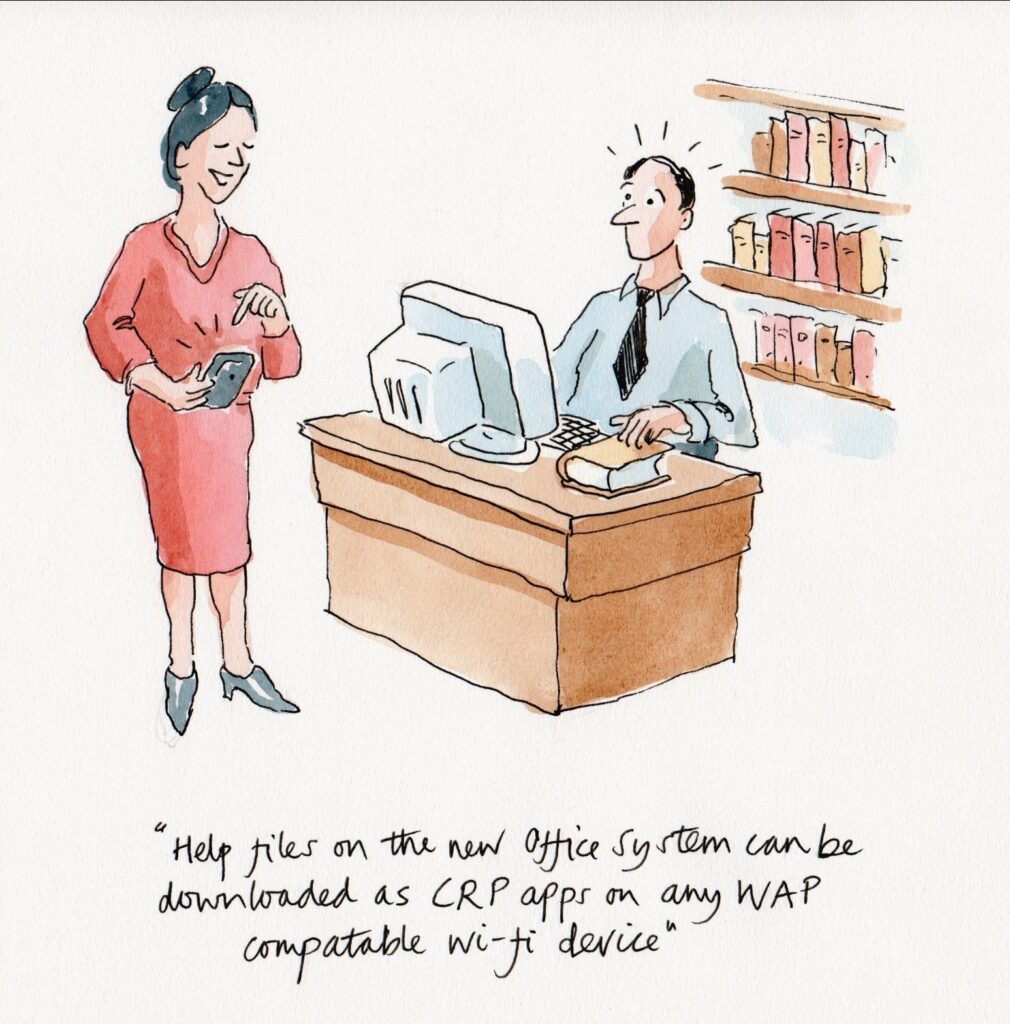
Working parents have been forced to combine work and home-schooling. Something I have huge admiration for.

Covid-19 has forced people to be agile.

This is one of the positive aspects of Covid-19.

Times are changing. At last.

Working from home has opened up many people’s eyes to how things could be different.

How career agile are you?

Career agility is a form of intelligence. It is also a skill that can be learnt.

A very apt quote for our times is: “When the winds of change blow, some people build windmills, others walls.” Chinese proverb.

Lockdown = time to think

Lockdown in 2020 has given many people unexpected time to really think.

About what they want.

Are you ready to make a change?

Get in touch to arrange your free no-obligation meeting. https://www.inspiringportfoliocareers.com/contact-us/

More

4 reasons career agility is a must and how to get there:

https://www.womenonbusiness.com/4-reasons-career-agility-is-a-must-and-how-to-get-there/

What is your career agility quotient?https://www.atalent.com/define-improve-career-agility/

How to create career agility post-Covid: What it takes to be most competitive. Forbes article May 2020.


https://www.forbes.com/sites/sheilacallaham/2020/05/03/how-to-create-career-agility-post-covid-what-it-takes-to-be-most-competitive/?sh=62fc187b7c13

Filed Under: Career strategy and planning Tagged With: career planning, career strategy, covid-19, the talent liberation company, the talent liberator

Transferable skills – where next?

June 18, 2020 By //  by Rachel Brushfield

A common theme amongst all of the career coaching clients I work with is a) they have a blind spot seeing their own skills and talents and b) how they can use them in other ways, i.e. possible new jobs or different careers to what they have done before.

I act as a pair of ‘wing mirrors’ to help them see their skills and be clear about where else they can use them.

In these times of redundancies and shrinking sectors caused by the impact of the coronavirus, this is a very important area to explore as part of your future-proof career.

What is a skill?

A skill is defined as: “cleverness at doing a thing, either from practice or a natural gift.”

Why do people find it hard to see their own skills?

Most people don’t think of themselves in terms of skills, and find it immodest to talk about their own ‘natural gifts’.

Common phrases that people express are: “I just do my job” or “it’s just what I do.”

It is not surprising therefore that people need support in seeing new career options for themselves. 

People are discouraged from saying that they are clever and our specific and unique talents are rarely acknowledged or recognised by others. Other people may have thought about you are good at, but not shared this information with you, so it is worth asking to elicit this useful information.

In employer engagement research, frustration about lack of feedback is a common complaint from employees about their line managers, so giving feedback to your direct reports is a good thing to do to boost morale at this time if you are a manager.

Articulating the benefits you bring

Awareness of your specific skills and the ability to articulate them, sharing tangible examples of the benefits they bring is crucial in career success, especially when you are competing against a lot of good candidates.

Spell it out

For people seeking a new or different career, being explicit in helping others to see how your skills are useful in a related context is a must to convince your potential employer that you are up to the task, and not a risk. Self-awareness, confidence and the ability to market yourself, plus overcoming natural fears about change enable a change in career direction to be within reach.

Self-reflective question

What’s my best skill and in what other contexts is it useful?

Inspiring quote

“Believe in yourself. Have faith in your abilities. Without a humble but reasonable confidence in your own powers, you cannot be successful or happy.”

Norman Vincent Peale

5 tips to help you identify your transferable skills

1) Get someone to ask you how you do your job and to write down what you say and then share their perspective of your skills with you.

2) Think about something you do well naturally and write down the specifics using the third person. Practice saying “I am really good at, for example when ….” This makes it feel more comfortable and not ‘boastful.’

3) Analyse the ‘process’ you use to do your work step by step. Most people have a process incorporating certain skills but don’t see this, as they are too close to themselves. This can be turned into a model or infographic to use on your CV, on social media or on a personal web site.

4) Ask people you work with or live with for feedback about your specific skills and do the same for them.

5) If you want to fast track your awareness, get a career coach who is trained to see your skills and help you to see opportunities where they are useful that you may be unaware even existed.

To receive a free report Personal Skills Audit, please get in touch: https://www.inspiringportfoliocareers.com/portfolio/connect/

Filed Under: Transferable skills Tagged With: career strategy, employability skills, energise, rachel brushfield, skills, the talent libeartor, transferable skills

How to future-proof your career

June 18, 2020 By //  by Rachel Brushfield

The Brexit/political impasse and more recently the impact of the coronavirus has been very stressful for many people

With redundancies now likely to be on the horizon, and many companies currently having recruitment freezes, it can feel very challenging indeed to get a job/paid work.

Even in these challenging market conditions, a sense of moving forward and progressing is vital.

So how can you take steps today to future-proof your career for the longer term?

This blog shares some practical tips and further reading to inspire and help you.

V.U.C.A. world
The current world is volatile, uncertain, complex and ambiguous, or V.U.C.A. This is the new ‘normal’.

Focus on how you can help senior management and businesses with the challenges they face, for example business agility and transformation, creating a competitive advantage, original communication etc.

The competencies of control, curiosity, commitment, confidence and concern are important to be adaptable in your career.

5 career adaptability competencies

  • Control – being proactive, decisive & taking responsibility for your career;
  • Curiosity – broadening your horizons by seeking options, possibilities and knowledge;
  • Commitment – passionately pursuing & taking action to move to the career horizon of your choosing;
  • Confidence – belief in yourself & that you can achieve your goal;
  • Concern – having a positive & philosophical attitude to mistakes or rejection.

How would you rate yourself on these competencies?

Here are some tips to future-proof your career.

Build your career adaptability competencies: If you think of the above career adaptability competencies as ‘muscles’, how can you exercise them? What S.M.A.R.T. goals can you set yourself and what CPD can you undertake to build these ‘muscles’? This will put you in good stead now and in the future.

Understand your transferable skills: Skills you possess are useful in many different contexts outside of your current sector. Investigate new work areas where the skills that you already possess are valued.

Look at trends: Keeping an eye on changing trends is very important at all times, and especially when things are changing fast, which they are at the moment. In any shrinking market, there will always be areas that are growing. What specialisms are growing, for example, cyber crime and data analytics? Where are there skill shortages?

Update your skills: There are lots of free on-line courses, called Moocs shared by universities all over the world. Take advantage of these to learn new skills and develop your knowledge. For example critical thinking is a key skill of the future. Change management and commercial awareness are also good areas to develop. What actions could you take to refresh and develop these specific skills?

Build your career capital: With more competition, you need to have a higher level of qualification to succeed, and add value. Consider new accreditation and building a specialism. Investment now can create more opportunities in future. Explore thought leadership and initiate key note/panel opportunities.

Widen your options: It is wise in uncertain times to develop a portfolio career. Rather than having all your career ‘eggs in one basket’, and just have one source of earning money, explore new/different options, and develop multiple strands to future-proof your career. This is called a portfolio career – it is ideal for uncertain times. You develop different work ‘strands’ so you can pivot as markets change and you change. As an analogy, as with ingredients and cooking a recipe, the more ‘ingredients’ you have of skills, knowledge and experience, the more you can create opportunities for yourself.

Become tech savvy: New tech tools can be daunting at first, but learning them satisfying. Being tech savvy is important so that you hit the ground running in work. If there are two candidates of comparable skill and experience, having superior digital acuity will go in your favour.

Broaden your network: In the digital age, it is becoming more important to have a large diverse network. Many networks are providing free Zoom sessions during lockdown – take advantage of this and attend some networks you wouldn’t normally consider to broaden your network. Join some new LinkedIn groups, and connect with the members.

Free resources: Take advantage of any free resources from your professional body. There may be webinars, case studies and other resources you can access on their website.

Do a skill swap: A skill swap costs nothing, and enables you to learn a new skill, for example Excel spreadsheets, social media, cashflow planning etc. When you’re worried about the future, skill swaps are a brilliant way to skill-up.

Consider retraining: Retraining into a work area where there are skills shortages is worth exploring to improve your security and prospects for the longer term.

Build your resilience: Some people are naturally resilient, but it is a skill that can be learnt. Persistence and not giving up are very important. Determination will take you a long way. In fact, according to Charles Handy, a pioneer in modern ways of working, in his book ‘The New Alchemists’, determination is THE no 1 factor for success. Don’t give up!

It can feel like very challenging times at the moment. Remember you are not alone. Keep going.

Contact us to receive a free report ‘Discover Portfolio Careers’ https://www.inspiringportfoliocareers.com/portfolio/connect/

Recommended further reading

Our articles for the award winning Future of Work Hub:

Future skills for a lifelong competitive advantage part 1 https://www.futureofworkhub.info/comment/2019/3/22/future-skills-for-a-life-long-competitive-advantage-part-1

Future skills for a lifelong competitive advantage part 2 https://www.futureofworkhub.info/comment/2019/6/26/future-skills-for-a-life-long-competitive-advantage-part-2

Filed Under: Career strategy and planning Tagged With: career pivot, career planning, career strategy, energise - the talent liberation company, portfolio career, rachel brushfield, the talent liberator

What are your career KPIs and do they matter?

December 24, 2015 By //  by DigitalJenIPC

Reach for the stars

Preparing for a recent career event has made me think about career key performance indicators or KPIs; an often cited phrase for measuring performance. Lawyers, for example, are measured in 6 minute units of fee earning time, a key KPI, with published league tables – can you imagine how pressured that must be?!

Definition of KPIs

“A key performance indicator (KPI) is a metric used by business to evaluate factors that are crucial to the success of the business.”

How do you measure career performance specifically? If you are employed, your employer may use very different measures to what is important to you and if this is the case, it may be a good time for a job or career rethink.

If you are self-employed, is it the rate per day, how many days you work a year, enjoyable work, prestigious projects, number of referrals, client testimonials, repeat business, value per transaction/project or number of new clients?

Here is our definition of career KPIs for individuals:

“Career key performance indicators (KPIs) are metrics used by an individual to evaluate and measure factors that are crucial to their own perceived career success and progress.”

Types of KPI

• Financial; salary, rate/day, rewards, bonus etc.
• Progress; speed of promotion, increases in responsibility
• Work life balance; flexible working hours, sabbaticals taken, no of days holiday/year
• Fulfilment; feeling satisfied and enjoying your working hours and career
• Reputation/career capital; being seen as an expert, testimonials, sought after and needing to do less marketing over time
• Fit; a role that plays to your strengths and in which you feel ‘in flow’
• Purpose; giving back, making a difference to the world, involvement in CSR, working for an employer with clients in the charity sector or social enterprise
• Academic; membership level e.g. fellow in professional organisation, grade for further qualification attained

What are your top 3 career KPIs?

KPIs may change with life stage e.g. needing to fund children through school or university can make salary or a pay rise very important even if you are not that motivated by money, whilst flexible working is essential if you have young children for example.

7 tips to think about your career KPIs

1. Define your own unique career KPIs – don’t feel obliged to use standard measures – what is important to YOU?
2. Track your progress; measure and monitor at least every 3 months
3. Know your industry averages so you can bench mark/negotiate armed with facts and examples
4. Build self-awareness; know what motivates you and your personal values; what is important to you
5. Get a career coach to protect time to focus on your career and help you to see your full potential, something people often can’t do as they are too close themselves
6. Give yourself an annual performance review, or ideally a career review and planning meeting 4 times a year
7. Grade your KPIs; primary and secondary or ‘must do’ and ‘nice to have’

When will you make time to think about your career KPIs for the next 12 months?

A coaching session is a great way to ring fence time in your diary to focus on your career KPIs and career capital for the next 12 months. Book yours now, e mail us:

http://careerstrategies.co.uk/careercoaching/what-next/

Filed Under: Career strategy and planning Tagged With: career development planning, career planning, career strategy, energise, rachel brushfield, talent liberator

What’s your career capital?

December 24, 2015 By //  by DigitalJenIPC

Money raining down

Career capital is the value of competencies, knowledge and individual personality attributes and other career assets that you have to produce economic value.
Your career assets combined = your career capital; the sum total of your time, talent and potential. You need to consider it in terms of its present and future value when considering your long-term career prospects. If the internet is an ocean full of ‘fish’ i.e opportunities, you need bait to catch the fish you want. Career capital helps you to do this. What ‘fish’ do you want to catch e.g. employer or clients?

Why is career capital important?

In future, in less than 5 years, employers will have reduced permanent headcount and resource up on an as needed basis with individuals and employers rated transparently on-line.

Are you ready for the new world of work; differentiation and visibility on-line?

What does the future look like?

People per hour is a taste of the future. The Sense Network is one example of on-line resourcing. Employer evaluation sites like Glassdoor are a growing trend.

Career assets

Your career capital is made up of multi-faceted career assets which accrue over time.

Accolades
• Patents
• Awards
• League table rankings e.g. Chambers
• Who’s who listing

Academic
• Higher qualifications e.g. MBA, PHD, MSc/MA
• Links with academia or prestigious universities e.g. guest lecturer

Endorsements
• Client testimonials/employer references
• Peer testimonials/endorsements

Published works
• Articles
• Chapters
• Books
• White papers

Talent
• Multiple mastery areas
• In-demand skills e.g. creativity, big data management
• Languages
• Good emotional intelligence e.g. empathy

Networks
• Professional association involvement
• Membership of elite clubs
• Size & diversity of network
• Quality of network e.g. senior decision makers, high net worths

Events
• Hosting an event
• Speaking at an event
• Conference speaking
• Conference chairing

Charitable
• Pro bono
• Trustee post

Career credibility
• Prestige/trophy employers & clients e.g. FTSE 100
• Senior leadership positions e.g. C-Suite

Miscellaneous
• Personal brand

What would you add? How would you rate your career capital?

7 tips for healthy career capital

1. Create a career strategy and ensure your career capital is aligned with it
2. Define your ‘fish’ – i.e. target employers or clients
3. Audit your career capital quarterly and define career asset S.M.A.R.T. goals
4. Ensure you have insights about what is important to and valued by your target audience e.g. who are their heroes/heroines?
5. Measure stats for your career capital so you can monitor progress
6. Monitor your reputation – set up Google alerts & track your name/brand on Twitter
7. Use/monitor LinkedIn stats to evaluate the quality and profile of your network

Download your copy of our free report now to find out your transferable skills:

http://careerstrategies.co.uk/changingcareersreport/

Filed Under: Career strategy and planning Tagged With: career assets, career capital, career development planning, career strategy, energise, rachel brushfield, talent liberator

What is your career risk?

December 24, 2015 By //  by DigitalJenIPC

Lighthouse beaming light

In an uncertain and fast changing world, career risk is a very important factor to consider. One person’s attitude to risk is very different to another’s which is why self-awareness is essential with career strategy and planning.

“Life is inherently risky. There is only one big risk you should avoid at all costs, and that is the risk of doing nothing.” Denis Waitley.

Being clear about the risks you face in your career and having a plan A, B and C will help you cover all eventualities. I have been much more risk aware since marrying a lawyer as this is their job!


15 career risks

How likely are these to happen to you in the next 6-24 months?

1. Your boss leaves the company affecting your career progression
2. Your department or division is shut down
3. Your skills become obsolete
4. Your role can be replaced by technology
5. Funding or budget cuts occur
6. Your layer of management is removed
7. Your role is outsourced to save money
8. Your company goes into liquidation
9. Your employer is merged with another or acquired
10. The market for your product/service disappears with fast changing markets & disruption
11. Illness inhibits your ability to work
12. Your role is made redundant
13. Your work can be done cheaper by younger or foreign workers
14. Your performance is deemed to be unacceptable with the spotlight on productivity and you are ‘performance managed out’
15. There is a new CEO who creates many changes- ‘new broom’

What are your top 3 career risks and what is the likelihood of them happening?

What other career risks would you add to this list?

7 tips to mitigate risk

1. Create a career strategy and plan
2. Get a career coach
3. Invest in keeping your skills up to date
4. Keep an eye on fast changing trends & disruptive competitors
5. Do some career scenario planning; create plans A, B and C
6. Start developing a portfolio career – a future proof career option
7. Create a financial cushion to give yourself some breathing space

There is a trend away from employers taking responsibility for your career to the individual taking responsibility. This is a new concept for many as we do not get taught or trained in how to do career strategy and planning at school or university.

How can we help you?

http://careerstrategies.co.uk/changingcareersreport/

Filed Under: Career strategy and planning Tagged With: career development planning, career risks, career strategy, energise, managing your career, rachel brushfield, talent liberator

Primary Sidebar

Sign Up for Our Newsletter

Privacy by SafeUnsubscribe

Looking for something?

  • Being
  • Career agility
  • Career capital
  • Career change
  • Career coaching
  • Career fulfilment
  • Career prospects
  • Career satisfaction
  • Career strategy and planning
  • Change and uncertainty
  • Clarity
  • Confidence
  • Contracting and interim
  • Creativity
  • Diversity & inclusion
  • Emotonal intelligence
  • Employee engagement
  • Employment law
  • Entrepreneurial
  • Evolving a business
  • Fear
  • Flexible working
  • Freelance
  • Future-proof your career
  • Goals
  • Guest blog portfolio career
  • Habits
  • Happiness
  • Health
  • Hobby becoming a business
  • Interviews
  • Learning
  • Managing emotions
  • Marketing and selling
  • Money and abundance
  • Motivation
  • Networking
  • New year
  • NLP
  • Optimism
  • Performance
  • Personal brand
  • Personal development
  • Portfolio career
  • Productivity
  • Redundancy
  • Reflection
  • Relationships
  • Resilience
  • Retirement
  • Returners
  • Second careers
  • Self employment
  • skills
  • Small businesses
  • Social business
  • Social media
  • Starting a business
  • Stress
  • Success at work
  • Supporting our network
  • Talent management
  • Thought leadership
  • Transferable skills
  • Uncategorized
  • Unretirement
  • Vaues
  • Women
  • Work
  • Work life balance
  • Work trends
  • Working mothers

On Twitter

Twitter Sent An Error: Could not authenticate you.
  • Facebook
  • LinkedIn
  • Twitter
  • Website Terms & Conditions
  • Cookie Policy
  • Privacy Policy

+ 44 (0) 845 22 55 010
rachel@inspiringportfoliocareers.com

Copyright © 2026 Inspiring Portfolio Careers from Energise, The Talent Liberation Company · Site Design by DigitalJen ·

We use cookies to ensure that we give you the best experience on our website. If you continue to use this site we will assume that you are happy with it.